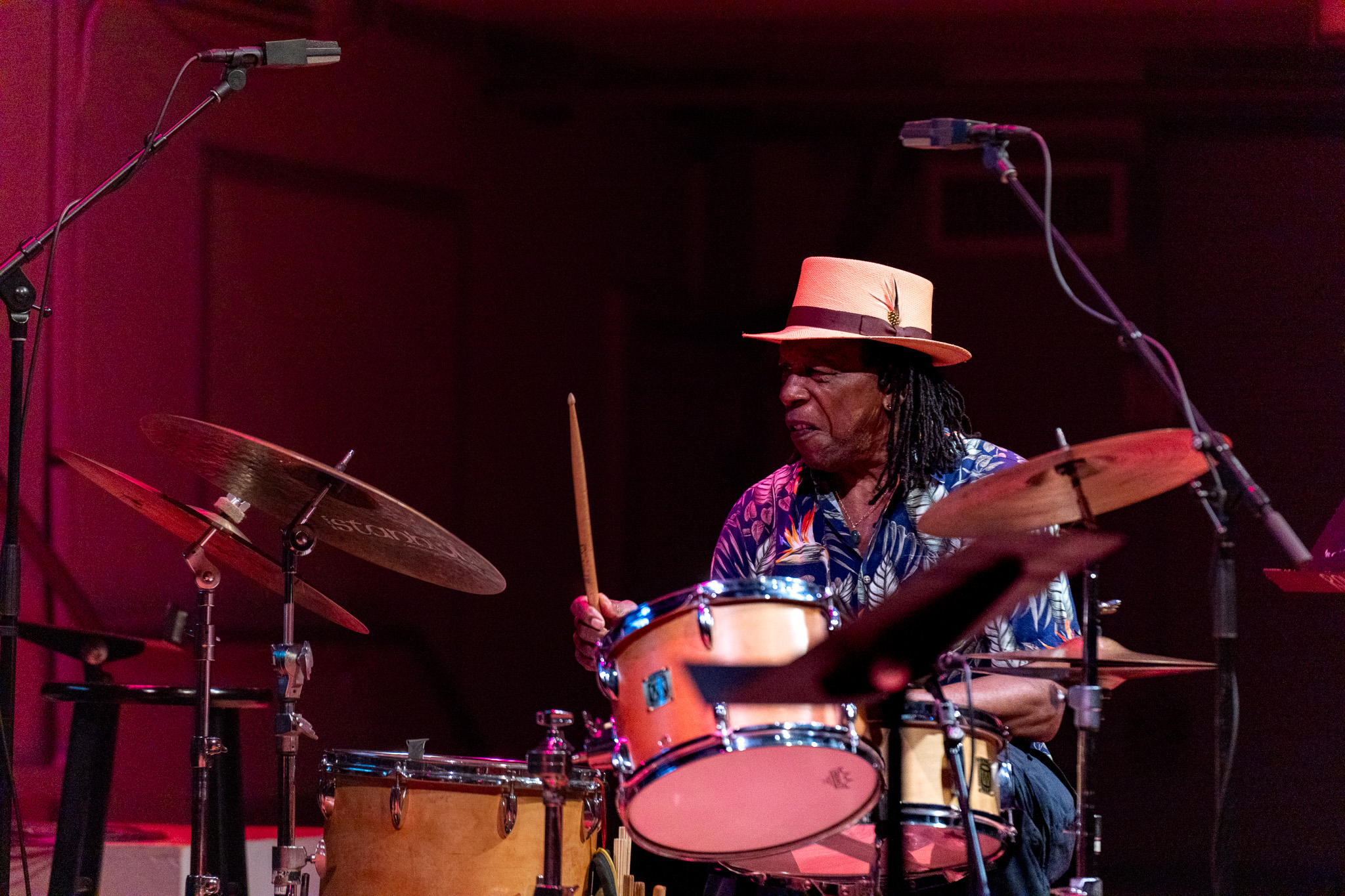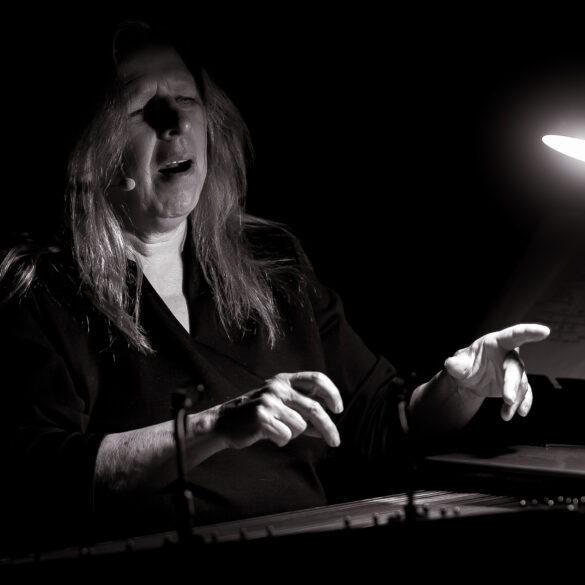
This was the only night I could conceivably visit Kanazawa, and fatefully, Sinikka was performing at the historic Mokkiriya jazz cafe and live house, founded in 1971, on this night, on tour from Norway. Meeting her in western Japan was as fortuitous as it is unlikely. Sinikka performs jazz-inflected songs inspired by the traditional music of the Forest Finns on a 39-string kantele (a kind of harp that sits horizontally on a table) that are haunting and unforgettable.
Sinikka’s singing is as clear as a bell. Yet, the purity of her voice and her decisive intonation, coupled with the dulcet sounds of her instrument, also express something profound, conveying compassion, mystery, and an ancient knowing. Gently, her music flows all around us, free of impurity and full of wonder, like a spring whose pristine and paliative waters well up from some primordial source. I wanted to know what makes Sinikka’s music so grounding, purifying, and ethereal — and what she was doing in Japan!
Perhaps it was a kind of revelation when I realized what I longed for was a lake. A still lake, shrouded in mist — peaceful, yet faintly uncanny. And Morcote, by Lake Lugano, appeared as the answer, after just a few seconds of searching on my computer. Since then, Morcote has become synonymous with Stillness to me, a word I return to whenever I need calm within my own mind.
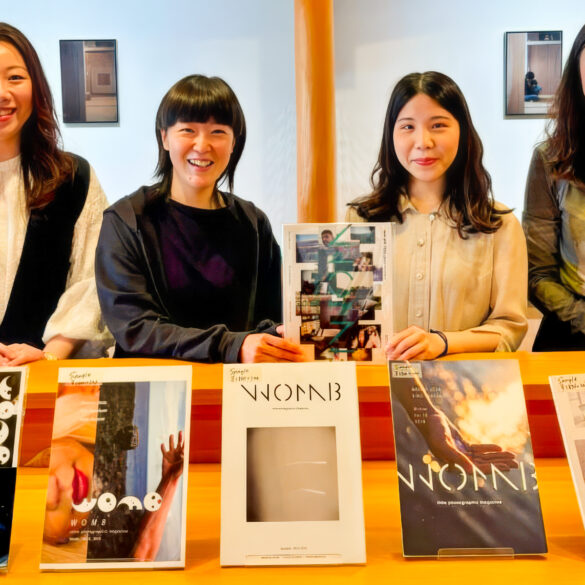
I had circled the KYOTOGRAPHIE KG+ Photographer Group WOMB’s 10th Anniversary exhibition as one not to miss. I was attracted to WOMB’s mission, which seemed to offer a feminine gaze yet take a metaphorical and expansive rather than body-centered view of a womb’s function. A small collective of Japanese female photographers who have been publishing WOMB photography magazine since September 2013, WOMB says they named their group and magazine to evoke “things that no one knows yet, a place where things are born (and grow).” Fortunately, I was able to meet two of the photographers, and among my many experiences at KYOTOGRAPHIE, this exhibition proved to be a highlight. Honestly, it was inspiring and rewarding beyond all expectations.
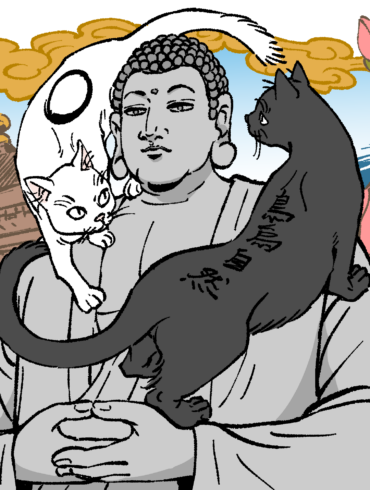
Photo © by Hiroki OtsukaOn my way from Kanazawa down to Hiroshima, I took a detour in Fukui Prefecture to visit Gotanjoji, a Sōtō Zen temple in Shoden-cho, Echizen City, known informally as a cat temple. I came for the cats, but I was also intrigued by the temple’s history, such as it is. While many temples in Japan are hundreds of years old, Gotanjoji was founded in 2002! Despite the temple's young age, its history dates back to the late 13th century Zen monk Keizan Jōkin 瑩山紹瑾, who was born in Echizen and was, I discovered, instrumental in opening Zen to women. Gotanjoji took it one step — or four? — further, bringing cats into the spiritual practice.
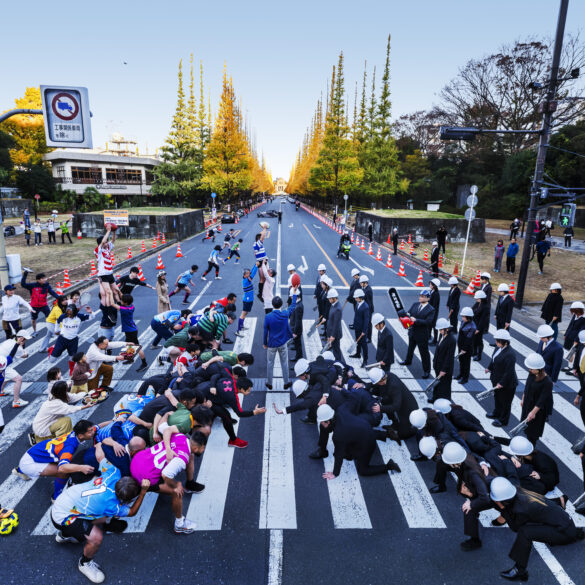
Masahiro Usami creates art, photographic mandalas, by undertaking a journey, as much relational as through time and space, to understand and capture the essence of a community’s journey in collaboration with that community. In his words, “Each individual photograph [in his long-running mandala series] features a central figure, all of whom come from different regions and standpoints, and then distributed in their environs are the people and things that express the world of that particular figure, just like the form of a Buddhist mandala painting.” His latest depicts the confrontation between citizens and developers over a proposed radical redevelopment of a beloved and historic park in the heart of Tokyo.
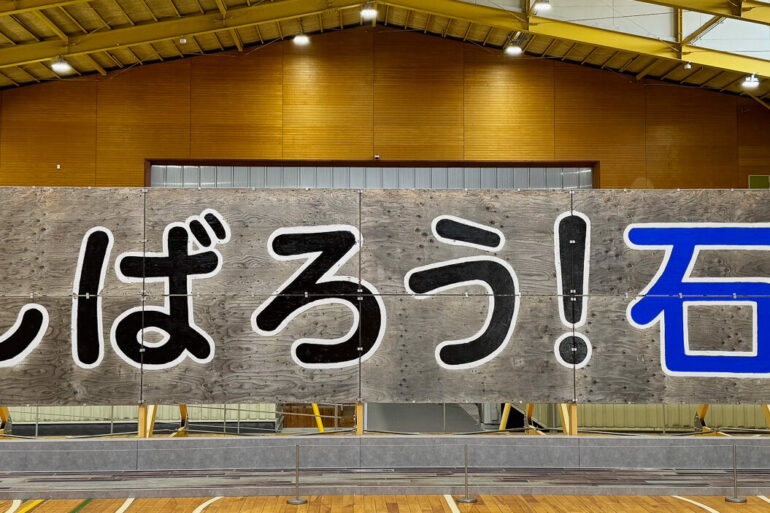
This large sign, emblazoned with the words がんばろう!石巻 meaning Let’s Go, Ishinomaki, was found placed in the ruins of downtown...
A visit to MUSE (Music Unites Special Education), a certified NPO founded in Sendai City by pianist Atsuko Nishina in 2001 to increase the opportunities for people with special needs to touch highly artistic music and art and express themselves freely through artistic creative activities, with composer Aya Nishina 仁科彩 and her partner, the visual artist Shimpei Takeda 武田慎平, afforded me the opportunity to understand their creative work more deeply and to recognize that their art and their teaching work, while different in form, have the same purpose, each informed by and expressing the same universal spiritual principles that, in fact, guide all true healing work.
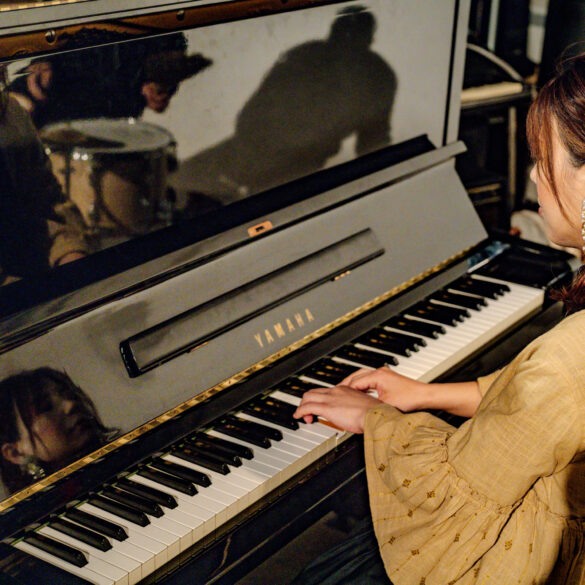
While struggling to find contemporary jazz venues in Osaka, I stumbled upon Studio T-Bone, a venue supporting both live jazz and photography and decided to visit. Pianist Yukari Sekiya 関谷 友加里 and percussionist Naoto Yamagishi 山㟁直人 やまぎしなおと were improvising together. While I didn't manage to get to know them well on that occasion, I was delighted to spend time with the creative family members running the studio. A chance encounter months later unexpectedly brought Yukari back into my mind. When I reached out to her, she responded, and I've now learned what a deep and inspiring artist and person she is, opening the door to possible future collaborations. It was a powerful reminder that we can't always see right away why our intuition speaks to us. Sometimes, it may be setting something in motion far in the future or for a purpose quite different from what we imagine.
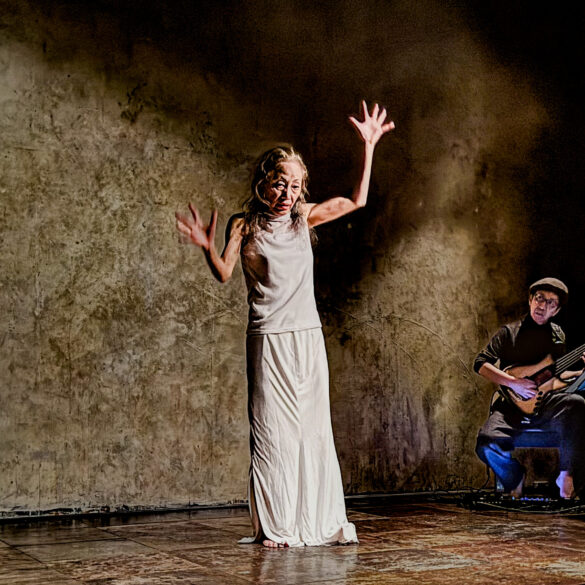
On my first night in Kyoto, I attended FOUR DANCERS vol281 at UrBANGUILD, a cafe/bar and multidisciplinary performance space in the heart of Kyoto. Like an old-school club on the Lower East Side of Manhattan, it’s dark, grungy, and covered in flyers. UrBANGUILD presents a wide variety of younger and older artists and draws an extremely diverse audience as well, making it a beloved oasis for contemporary and experimental performing artists in the otherwise more traditional and conservative-minded Kyoto. I came to see two artists in particular, Chizuko Kotani / 小谷ちず子 and Miwako Inagaki / 稲垣美輪子.
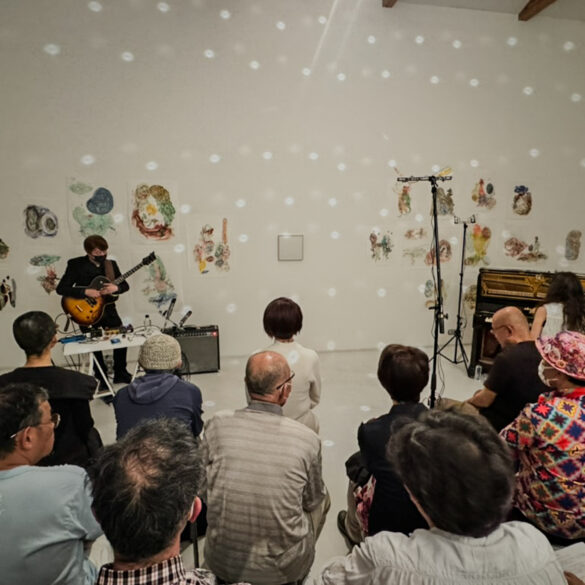
On my last night in Osaka, I attended the closing night reception for the solo exhibition 置き去られた鏡 The Forsaken Mirror by celebrated artist Chie Matsui 松井智惠. The performance consisted of music by avant-garde musicians sara (piano, perc.) & Shin’ichi Isohata 磯端伸 (guitar) and a poem read in Japanese, Korean, and English by Chie, Yangjah, and Miho, respectively. At first, I didn’t know what to make of the performance or the abstract, brightly colored prints surrounding a centrally hung mirror. Eventually, in the space created by the disorientation and abstraction, I reflected on who these people were, who I was, and the various identities we experience throughout life, which proved enlivening.
Since the founding of Shihonryuji Temple (which later became Nikkosan Rinnoji Temple) by the Buddhist monk Shodo in 766, Nikko,...
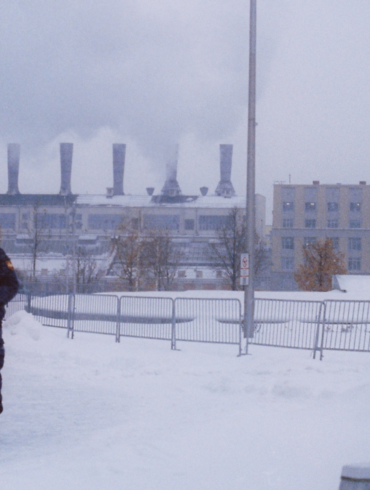
The previous night, the snow fell heavily. The snowflakes fell gently yet fiercely, floating through the night like magical creatures. The cold crashed on me suddenly as soon as I stepped outside, aggressively occupying all the corners in my body, sneaking into every inch of carelessly exposed skin. The cold froze on the skin, piercing my brain, aching with every breath. On cold winter nights like this, the best thing to do is to stay in a cozy room, drink a cup of ginger tea, and talk about everything — except politics, of course. Politics in Russia these days is taboo. Russians avoided the subject like a terminal illness. “War in Ukraine? No, don’t worry, we are fine.” They changed the subject. Except Varf Labec.