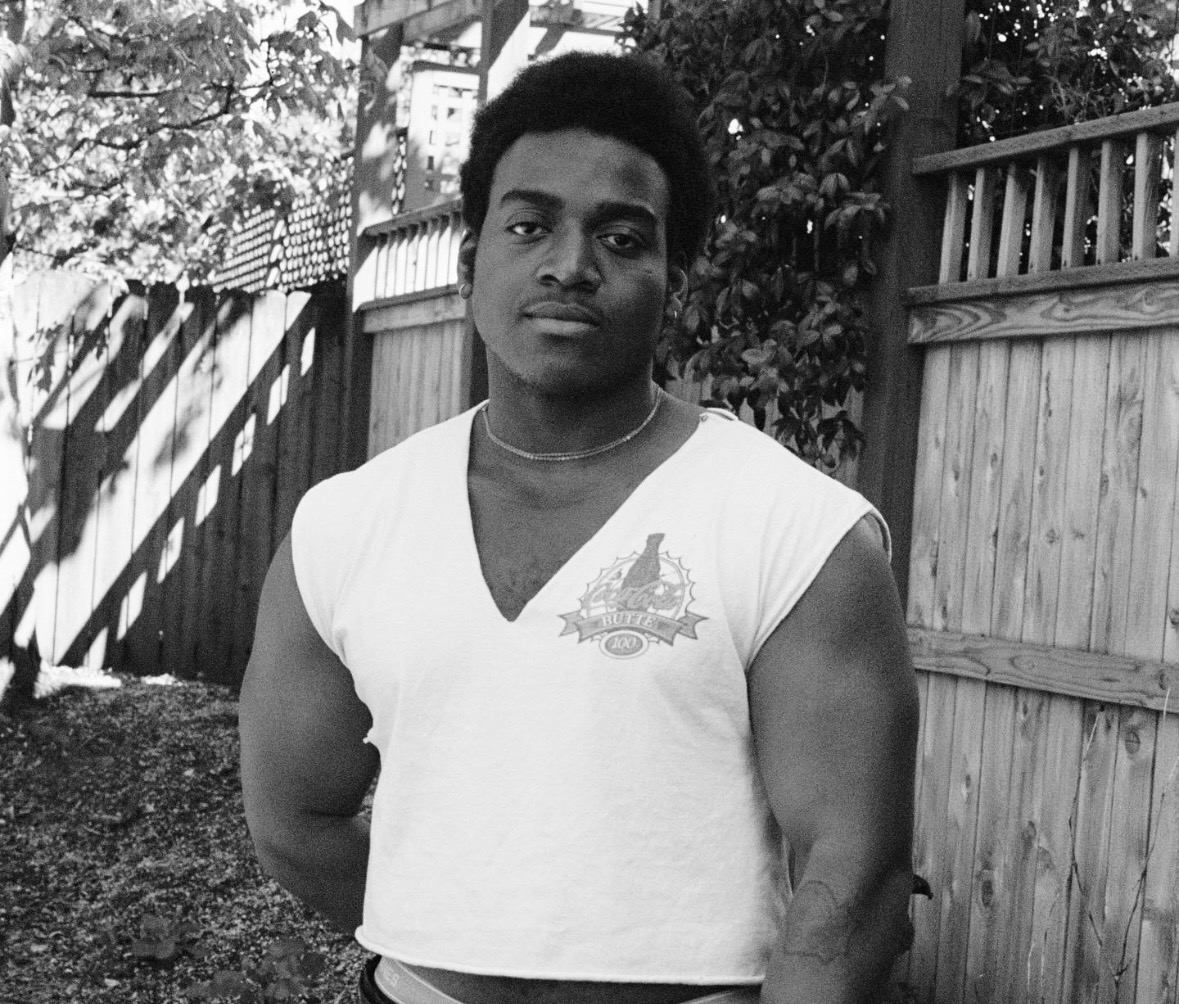
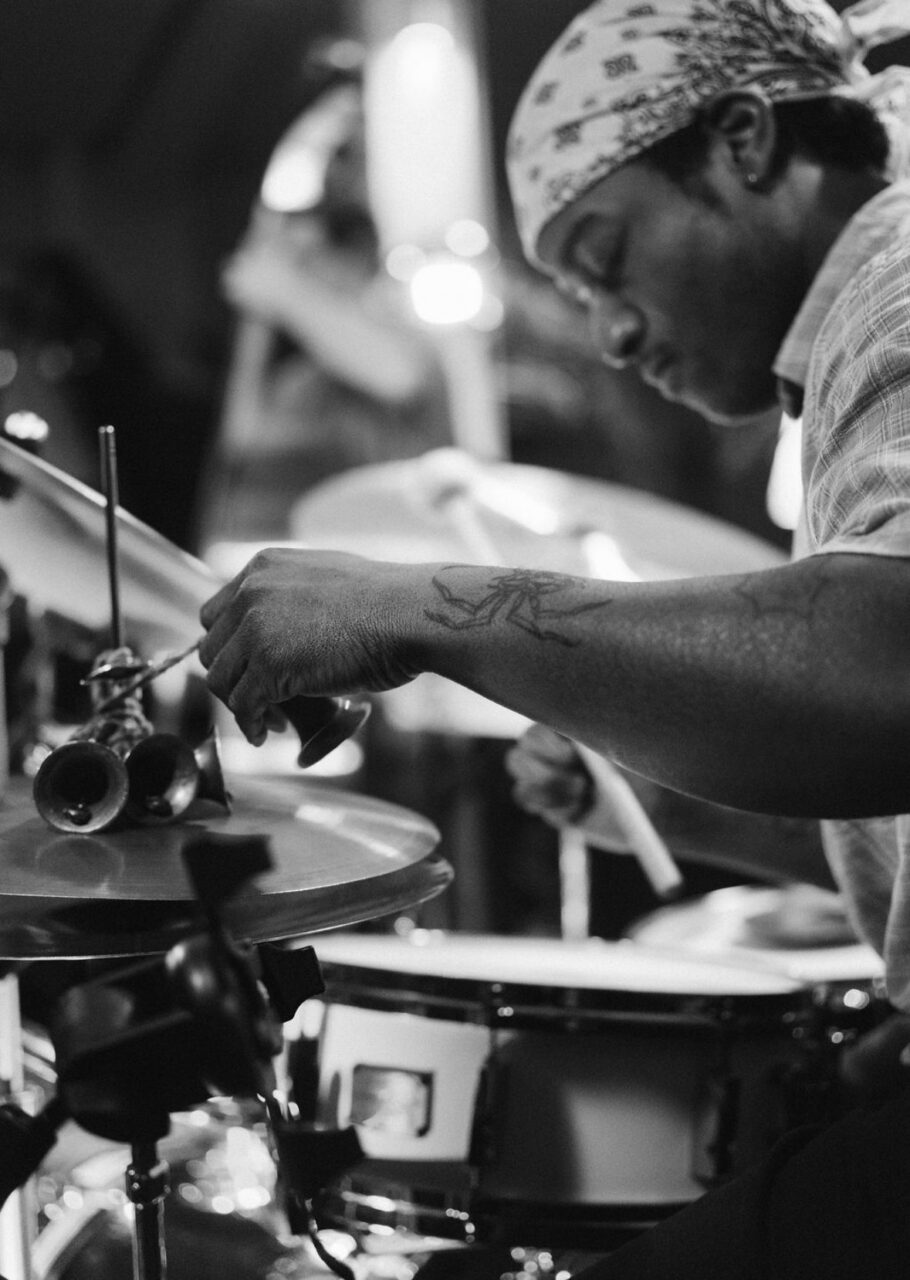
I met him through a random introduction from Todd Marston, the first interviewee of this series, in Berlin last year. From the very first moment, we fell straight into a deep conversation, and I loved it.
He completed a Master’s in Jazz Studies and a Bachelor’s in Psychology, and is now a jazz program student in Basel, Switzerland. He is surrounded by incredible musicians—big names in jazz—receiving intensive coaching every other week, participating in group sessions, and performing regularly. From June, after the coaching term ends, they will go on the road until the end of the program year.
When he told me that his dream is to become a professor of philosophy, I was confused at first. I thought, wait—do you mean teaching at an institution? How does that work?
But then I realized something important. He is someone who is creating his own way of living.
Yes, he may want the opportunity to teach in a classroom if that arises. But what he really means is that he wants to live his philosophy—to experience it, experiment with it, and share it with others.
“To me, there was always this other presence—something I felt constantly. You could call it metaphysical, spiritual, whatever. But I remember one specific day very clearly. I was about 12. I walked into church, and the music had already started. I had to go up to the drums.
But before I even got there, I felt this physical energy around my body. And I was like—whoa, we’re all here together. The music was so powerful. The beat, the sound—everything was happening at once. And it felt physical.
That was the first time I ever felt music physically. And since then, I’ve always searched for that kind of connection.”
If I don’t feel that, it doesn’t mean it’s not worth it—but it feels disconnected from why I do music in the first place. Which is to reach that kind of pure connection.”
“As I grew up and moved outside of religion, I realized that feeling still exists. It wasn’t just about church—it was just how I was introduced to it.
What I was really feeling was connection. We were all connected. My grandma used to say, ‘on one accord.’ We were aligned in those moments. Fifty, sixty, seventy people—locked into the same beat, at the same time.”
“Then later, when I got into jazz—A Love Supreme, Giant Steps, Coltrane, Miles—it was like, oh shit, there it is again. That same feeling I had in church.
This is beyond religion. This is a language. This is a transfer of information. This is spirit. This is continuity.”
When he described the connection between philosophy and music, I immediately related to his lived experience. That is exactly what I have been searching for in music—and how I practice both philosophy and life.
I’ve been following a Japanese influencer for a while now. She shares different ways of living fully in the moment, through dance, music, art, fashion, business… and embodies how powerful that can be. But every time I watch her, I think—this is what I, we, musicians have been doing all along.
“I saw this gap, especially in Utah, where I went to college and started playing jazz. There was a lack of African-American psychological support. A lot of the methods and models are built through white experience—even when they talk about Black people, they filter it through a white lens of Black experience, not through Black experience itself.
So it wasn’t contextually accurate. I was learning about Freud, all these European thinkers—which is fine—but they don’t come from the same lineage as my people. So I don’t think we can diagnose or understand people in the same way.
I started challenging that. I wrote a paper on the detriment of the African-American psyche.”
“So it became about philosophizing, but also applying it—thinking about how psychology could be used in a more practical way. And then relating that back to jazz, to bring people back into their bodies.
Because historically, for African-Americans—at least in my culture—music has always been how we reconnect to our bodies. Jazz, blues, work songs, spirituals. That’s where it comes from. Beautifully, we now have different forms of therapy—music therapy, art therapy—not just sitting in front of someone and talking.
Language is everything. Language is music. Language is thought. The way we listen is language. The way we understand each other is through language.
So if we can use different languages and dialects, we can give people a more accurate understanding of themselves. Especially for Black people—to be understood properly.”
I think this is what led me to share my own experience—being one of the few female Asian drummers in the scene, and how that felt both limiting and, in some ways, beneficial.
He began talking about gender and marginalization.
He said that when you are told you cannot do something—even when you are already doing it—it creates confusion. It makes you question your own reality.
I had described my past self as “egoistic,” because I felt competitive.
He challenged that.
“Ego is an interesting word. It sounds more like you just wanted to be seen for who you are.”
That changed my perspective.
Everyone wants to be seen and accepted. That is not a flaw—it is human.
Looking back, I realize I wasn’t driven by ego. I was trying to affirm my existence. Especially in an environment where I felt uncertain, surrounded by strong personalities, I was trying to define who I was—what my sound was, what I should play.
That is why I now encourage people to write their own music. It is one of the most direct and safe ways to discover yourself.
People become powerful—not only when they know who they are, but when they truly recognize that they exist.
We are here. Right now. That alone is enough.
But in today’s world—with constant information and endless distractions—we often lose connection with our bodies. Our minds drift elsewhere.
Dae says music is an anchor.
It connects people. It connects mind and body.
As someone who tends to overthink, I realize that I play music to return to the physical—to come back to myself.
“As much as I’m a non-binary choice individual, I don’t like one-or-two thinking. I really believe we can find our own way if we choose to. We create our own path—one that exists outside of what we’re told we should do.”
The second half of the interview began with my question about how to create a life—his intentions in life and in music.
And once again, he mentioned “Love Supreme.”
He had said the same thing when we first met. His intention is to reach that state—to accept people for who they are, what they are, and why they are.
“When I play, the reason I play is because I’m trying to get to Love Supreme. It might sound crazy, but for me, John Coltrane’s A Love Supreme, and Alice Coltrane’s Journey in Satchidananda, all of that embodies something essential. It shows that love is the highest reason I’m able to exist here and do what I do.
My ancestors loved so deeply. They loved those around them so much that they gave—so that I could be here now.”
He continued:
“My grandma always says, no one should be able to take away what’s inside you. People will try, and things will try, but you just have to keep going. You have to remember what came before you, and understand that things come together in many forms.
Sometimes what is meant for you doesn’t come in the form you expected—but it comes in the form you need right now.”
For him, Love Supreme is not just an album. It is a framework for understanding life.
“That album—and that concept—touched me deeply. It helped me understand my own life, my lived experience, and the experiences of so many others, even beyond Black communities.
No matter what is happening, we can always look toward love. Even the word ‘love’ is a reduction of something much bigger—of the feeling of connection. But for now, we call it Love Supreme.”
“That’s what I’m trying to reach when I play. And if I don’t feel that, I can’t really play. I just want everyone I play with, or anyone I encounter, to know that I accept them exactly as they are.”
At some point, he said:
“Jazz is continuous decision-making.”
That line stayed with me.
Recently, I had been feeling that I needed to start living my philosophy instead of just thinking about it. I realized I had been sending myself the same message over and over: I’m not ready.
But I’ve already learned so much. Instead of just collecting knowledge, it’s time to turn it into experience.
What I value about my own project is that it gives me a space to share my current thoughts and ideas in front of an audience. No matter what happens in the music, it is a choice made in the moment.
There is no absolute right or wrong. What feels “wrong” may simply be something you need to go through in order to move forward.
That is the philosophy I want to share.
I don’t play music to tell a fixed story—like a lost love or a favorite memory. I want to embody my life through music, show how powerful it is to be in the moment and say:
“This is what I choose right now.”
And that choice can always change. Anyone can do the same.
I’ve always felt that I wasn’t a typical musician or a typical singer-songwriter. But now, it’s becoming clearer what I’ve been trying to express.
Music is not the goal. I simply want to live my life—and express my existence through music.
Dae also spoke about philosophy in a different way.
“Philosophy, much like psychological evaluation, has looked very different for Black people. The philosophers I connect with are people like Fred Hampton, Angela Davis, John Coltrane, Miles Davis, Monk, Charles Mingus, Alice Coltrane.
They weren’t always recognized as philosophers because they didn’t fit the academic image. But they were living what they believed in real time.”
He explained that these figures didn’t have the luxury of abstract thinking detached from reality.
They were acting, surviving, resisting—often under threat.
Their philosophy was not separate from life. It was life.
“You don’t have time to sit in a café and theorize when your survival is at stake. Philosophy looks different when action is happening at the same time as thinking.”
And for him, this is exactly what jazz is.
“In jazz, you are playing and, at the same time, realizing how you’re playing. You react in real time. The composition is happening as you play. You can’t stop—you just respond.”
That idea resonated deeply with me.
It helped me understand why I play the way I do.
I want to live freely—but also take responsibility for that freedom. Music is where I practice that.
My favorite way to play is to improvise within a structure.
We don’t start from scratch, and we don’t simply reproduce what already exists. We know the song—but we reshape it in the moment.
We change harmony. We extend sections. We shift direction together.
We listen. We sense. We respond.
To play like this, you need awareness.
You need to listen—not from ego, but from a broader perspective.
You don’t cling to what the song “should” be. You don’t hold onto what was rehearsed.
You stay with what is happening now.
Every note is a decision. Even repetition is a choice.
That is what creates a convincing sound.
Music gains power through intention—through how clearly and strongly that intention is expressed.
And that is what I want in my music.
I want everyone involved—musicians and audience alike—to become part of the moment.
I don’t want passive listeners. I want active presence.
Not just understanding the music, but understanding themselves.
What are you feeling? What is happening in your body?
Even if a “happy” song makes you feel something completely different—that feeling matters. It is yours.
And it deserves to be acknowledged.
Dae also spoke about marginalization in a way that stayed with me.
“When you’re marginalized, you internalize it. Your mind becomes: ‘I am marginalized.’ Then you try to remove that from yourself. But the truth is—you exist, just like anyone else.”
At its core, it is about recognizing your own existence.
He explained this through his “cycle model of the outlier,” using gender as an example.
Society categorizes people into binaries—male and female—and attaches expectations to those categories. Language reinforces these roles, making them feel like absolute reality.
But eventually, people begin to question these structures.
They challenge them. They resist them. They redefine themselves.
And this process continues—again and again.
Like jazz.
Each time, you respond differently.
In the end, his long-term vision is simple:
To exist. To align with truth. To move toward Love Supreme.
“As long as I can align with truth and Love Supreme, and show up for myself and others—that’s enough.”
Because showing up for yourself is also how you show up for others.
Born in Hiroshima, Japan, I started my musical journey with piano and trumpet, before finding my passion for drums and studying in Osaka, then later at Berklee College of Music in Boston. Over the past two decades, I've worked as a professional drummer in Boston, NYC, and Berlin.
Along the way, I faced health and mental challenges that led me to explore Yoga, healing techniques, and holistic practices. These experiences not only supported my own well-being but also inspired me to guide other musicians on their path.
In 2023, I launched my solo music project aine wie keine and released my debut mini-album — a deeply personal expression of my journey. Through Beats de Roots, I now combine my passion for music, coaching, and holistic living to help female musicians grow, heal, and thrive.
To provide the best experiences, we use technologies like cookies to store and/or access device information. Consenting to these technologies will allow us to process data such as browsing behavior or unique IDs on this site. Not consenting or withdrawing consent, may adversely affect certain features and functions.
Functional
Always active
The technical storage or access is strictly necessary for the legitimate purpose of enabling the use of a specific service explicitly requested by the subscriber or user, or for the sole purpose of carrying out the transmission of a communication over an electronic communications network.
Preferences
The technical storage or access is necessary for the legitimate purpose of storing preferences that are not requested by the subscriber or user.
Statistics
The technical storage or access that is used exclusively for statistical purposes.The technical storage or access that is used exclusively for anonymous statistical purposes. Without a subpoena, voluntary compliance on the part of your Internet Service Provider, or additional records from a third party, information stored or retrieved for this purpose alone cannot usually be used to identify you.
Marketing
The technical storage or access is required to create user profiles to send advertising, or to track the user on a website or across several websites for similar marketing purposes.