
by Rob Clough | March 25, 2026 | Art Literature
Why Comics?
It can take a long time to determine one’s purpose in life, especially with regard to a career. Finding something that you’re good at and that brings you joy is exceedingly difficult. Sometimes, that thing can sneak up on you at the right time and in the right place. This has been my experience in my capacity regarding comics. Call them comic books, graphic novels, graphic memoir, comic strips, mini-comics, or any other marketing or technical names, it all boils down to the unique fusion of word and image on the page.
Comics are part of my DNA. I learned to read with Charles Schulz’s classic strip Peanuts. I read any comic I could get my hands on: humor, war, super-heroes, horror, romance. The language of cartooning spoke to me in a way paintings and prose did not, emphasizing a narrative while using gesture, body language, and facial expressions in a way that preceded written language. As I grew older, I discovered that comics weren’t simply being used to tell stories for children. The underground and alternative eras of comics in the US, along with strong traditions in Japan and France, demonstrated that comics could do anything and be for anyone.
When I realized that I wanted to be a writer, comics criticism became an outlet for the point of view I had developed over a lifetime. Writing criticism about self-published, small-press, and otherwise marginalized comics genres was a niche field within another niche field. It also gave me opportunities to write for a wide variety of publications, moderate panels at festivals, doing portfolio reviews, and even curate selections at one show for the Library of Congress. My greatest thrill as a critic was seeing young cartoonists develop over time, encouraging and pushing them with my writing. It’s a big reason why one of my long-time projects is examining the output of comics-specific art schools like the Center for Cartoon Studies, as well as the comics programs at other art schools.
When I retired from my long-time data management job in 2018, I decided to become a freelance editor. Hustling for gigs and putting yourself out there can lead to some amazing things. In my case, I got a job teaching at the Sequential Artists Workshop (SAW), a comics art school. I started Rent-A-Critic, my freelance editing service for cartoonists to help them with everything from line editing to story structure to advice on writing pitches. I became the Programming Director for the Small Press Expo (SPX), the most important small press comics show in America. Most importantly, I was asked by a critic friend of mine to join him in forming our own non-profit company. Along with chief editor Daniel Elkin, publisher Alex Hoffman, and fellow critic Ryan Carey, we formed Fieldmouse Press.
Fieldmouse Press: The Early Days
Elkin had the idea of us joining forces to provide focused comics criticism, and so our website SOLRAD was born. Our goal early on was to provide quality comics criticism, interviews, essays, and commentary, and to compensate our writers better than any other comics site. We certainly met our goals, especially in our first year when we were aggressive in providing new content every day. We were fortunate that the great Julia Gfrörer gifted us with our SOLRAD logo. Sophia Foster-Dimino designed our Fieldmouse Press logo. Ryan was our workhorse early on, often doing two reviews a week for well over a year, although all of us contributed a lot of articles. Right before we moved some of our focus onto publishing, Ryan quit and went his own way, and he remains a prolific and influential critic. SOLRAD was able to commission the occasional comics story, but the bulk of our comics content comes through our SOLRAD Presents program. Recognizing that there aren’t enough online venues to permanently house webcomics, we’ve offered a number of cartoonists a chance to have their work prominently and properly featured and preserved. They retain all rights, including having their work removed if they wish, in case it’s published elsewhere.
From the very beginning, however, Alex Hoffman and I conceived of Fieldmouse Press as a chance of achieving our real dream: editing and publishing a line of comics in the form of graphic novels, graphic memoirs, comics novellas, and minicomics. With SOLRAD under Elkin’s stewardship, I had an idea for our first book. The cartoonist Ariel Bordeaux had been a small-press trailblazer with her 90s minicomics series Deep Girl, and in 2013, a publisher called Paper Rocket set out to reprint them. The editor and publisher, Robyn Chapman, hired me to interview Ariel for the project. In the process of conducting a wider interview, I learned of her MFA thesis project at the Center for Cartoon Studies, titled Clutter. I encouraged her to shop it around a bit, but nothing came of it at that moment — but I never forgot that project.
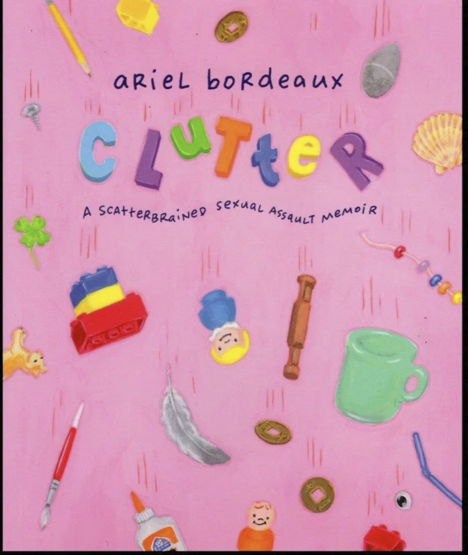
I approached Ariel about publishing Clutter: A Scatterbrained Sexual Assault Memoir, with an additional few pages serving as an epilogue. Years of goodwill inculcated by providing fair critiques from both Alex and me gave our first fundraiser the momentum we needed to succeed in funding it. We hired a professional designer to help Ariel with the complexities of the color, while I helped Ariel across the finish line. Released in 2022, Clutter went on to receive an Ignatz Award nomination.
Up until this point, I had had some experience as an editor, and even some with comics, but the skills Alex and I had to learn in our journey with Fieldmouse were more than just technical: it was a statement of aesthetic purpose. The division of labor for Fieldmouse finds me doing most of the editing during the frequently long periods of time it takes to bring a book to life, while Alex handles production and design. This means he lays out each book, cleans them up, deals with printers, gets proofs, works with our fulfillment center, and handles the finances — among other tasks! I handle some promotional work, but my main task is helping the artist build a book from the ground up. While Alex taught himself many of these skills and has an extremely sharp eye for design, my concept of what editing is has evolved to encompass my worldview.
The Art of Editing
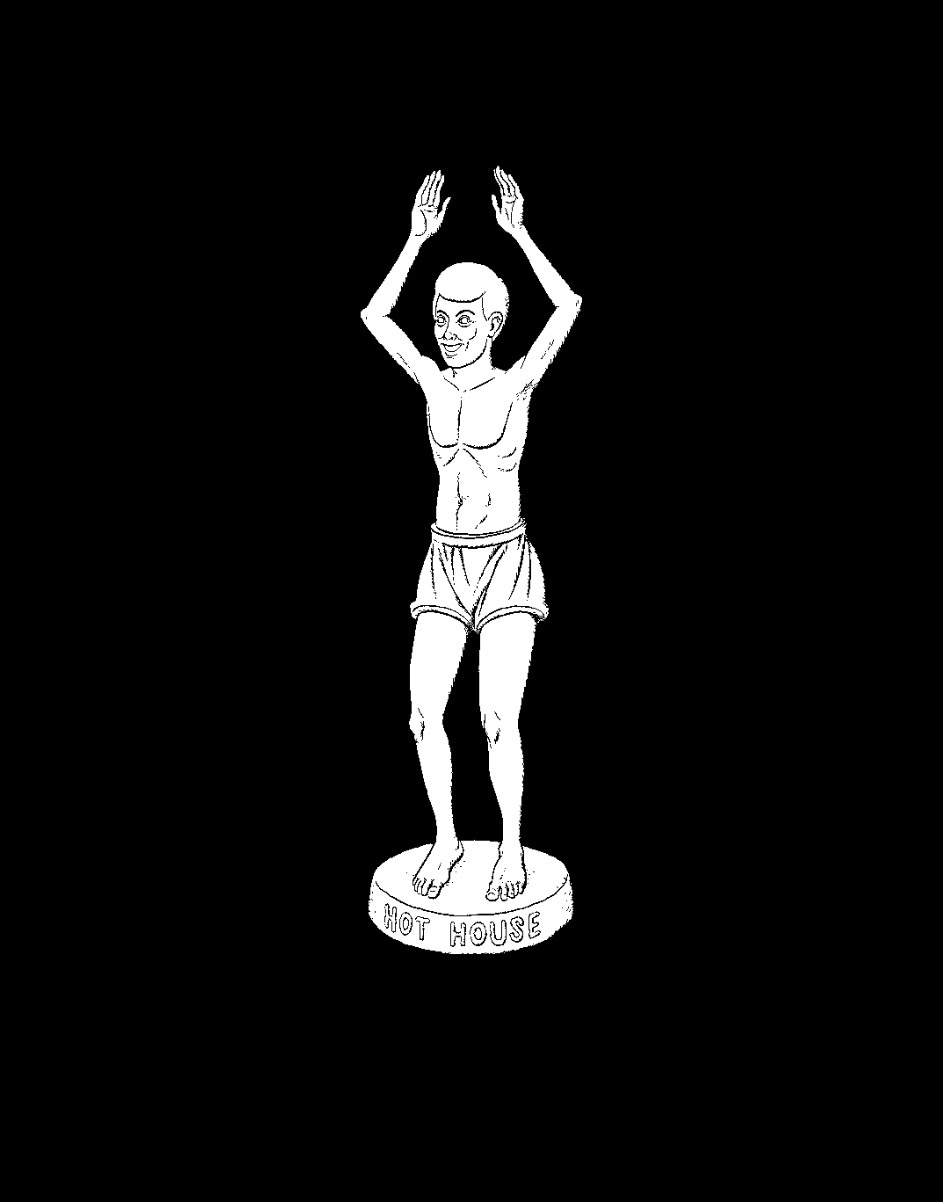
What does it mean to be an editor? Every editor might answer this differently. For me, my purpose as an editor isn’t necessarily to tell an artist what to write or how to draw; instead, my goal is to help them make the best version of the thing they are trying to create. What this might necessitate differs from project to project and artist to artist. Fieldmouse works with a lot of young cartoonists who are crafting their first long-form book, and they may need much more attention than a book that’s given to us completely finished. For example, John Hankiewicz’s Hot House, one of my favorite Fieldmouse Press books, came to us when I sent John a message, asking him what he was working on. He said he had just finished a book, I asked if we could publish it, and he said yes. I am the “editor” of that book, but I didn’t do anything other than talk him out of doing an afterword for his beautiful, enigmatic work of comics-as-poetry.
Being an editor can mean being technical support, a facilitator, a therapist, a teacher, a friend, a student, a cheerleader, and above all else, a purveyor of total critical honesty. No artist will trust an editor if they think they are saying what they think they want to hear without really meaning it. Now, the delivery of a critique is important, and the “compliment sandwich” technique of offering praise while delivering the needed criticism is a vital component of this, but it only works if an artist understands and feels an editor’s unwavering belief in a project.
This is why Alex and I agreed that we both have to unequivocally love whatever we publish. I have to edit the thing, and he has to sell the thing, and there’s no way to fake that. Now, some of our books may reflect some of our individual tastes more directly than others. I am, at heart, a gag man, so some of our humorous titles reflect my tastes in that way, along with titles with an especially bleak sense of humor.
A lot of things that became important to me as an editor coalesced with my long-simmering ideas regarding comics pedagogy. After launching a course at Durham’s Night School Bar, Tom Hart hired me to teach my Hidden History of Comics class for his online Year-Long Program at the Sequential Artists Workshop, or SAW. The idea of meeting every student and everyone I edit where they are is the essence of my method. What makes for a good comic is balancing elements of intentionality of page design and composition with the spontaneity of drawing. Comics are unique in their fusion of word and image and the simultaneous apprehension of both when reading a page. When a page is done well, it simply sweeps the reader along into the flow of the story; when it is planned poorly, it removes the reader from their willing suspension of disbelief, reminding them of the mechanics of reading a page. It is exceedingly difficult to regain that flow once it’s lost. It’s my goal as an editor to ensure that the artist never loses the reader.
How this is done is being intentional with regard to page composition. How many panels does your page have? What is the grid formation? How are you placing your word balloons? What does your lettering look like? What’s the flow like from panel to panel, and then from page to page? Is it easy for a reader to ascertain the reading order from panel to panel, or are there moments when it’s confusing? Not every cartoonist needs to do a rough or thumbnail version of their comic, but even someone drawing straight to the page has to strongly consider these elements and be decisive about what they plan to do.
At the same time, the actual drawing and cartooning should be loose and retain spontaneity. I tell every cartoonist I work with that there is an ideal version of the thing you want to draw in your mind, but you will never, ever, ever be able to draw that ideal version. However, it’s that first attempt at drawing it that’s frequently the best and most spontaneous version, the version that has the most life. It’s fine to refine a drawing a bit, but work it over too much, and you’ll strangle the life out of it and leave it inert on the page. Cartooning and illustration are related, but different arts. Illustration demands the singular, striking image that we linger on. It is often naturalistic, but even more abstract illustrations, by design, are static. Cartooning is less about an individual image and more about body language, gesture, facial expressions, the relationship between bodies in space, and panel-to-panel flow.
As an editor, choosing an artist to publish means that we believe in their work and want them to create it their way. I’m much less liable to ask for an art change than I am regarding lettering (especially standard line edits) or page composition, like confusing panels or breaking the 180-degree rule. Comics are primarily a visual medium, so I always encourage the artists I work with to let their work breathe on the page — don’t cramp it with too much text. Some artists require no reminders on this, and others have had to learn certain aspects of cartooning for the first time. For many artists, comics are a self-taught adventure.
The Highlights Of The Journey
Every book I’ve edited has its own story. Every artist I’ve worked with has needed different things. Here’s a brief look at some anecdotes from some of those books. This isn’t a comprehensive look at every book I’ve edited, but rather just a taste.
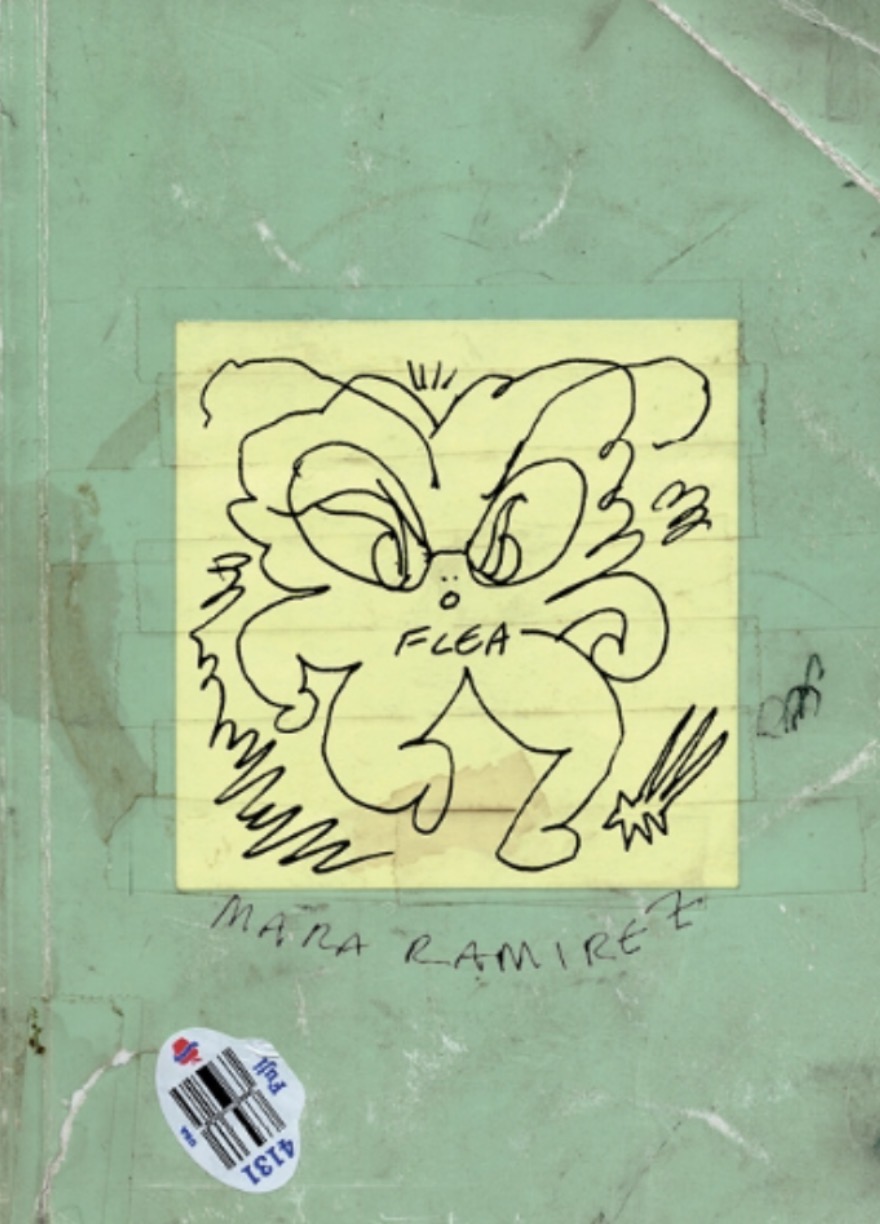
● Flea, by Mara Ramirez. Mara and I had an instant mind-meld. We took what were a series of loose sketches and scribbles about a young trans woman named Flea and turned it into a series of poignant, lively vignettes that had a strong emotional through line. Mara showed me a lot of trust as an editor, and it paid off in a beautiful book that we both love.
● Flesh, by Zoe Belsinger. This one is not quite done, but Zoe transformed a rough first draft and completely redrew the entire thing, and then added color. I’ve never seen an artist level up over the course of making a book as she did. This one will be out in September of 2026.
● Complete And Utter Malarkey, by November Garcia. This one came to Fieldmouse after its original publisher folded, and I’m grateful we were able to make it. November is one of the most hilarious memoirists I know, and I was insistent on including virtually all of her work up to that point. It was a pleasure to work on sequencing it with her.
● You Are Not A Guest, by Leela Corman. This was another collection we did, and it was our mission to make this collection of color comics look vibrant. Corman had had a negative experience with the printing of a collection with a previous publisher, and we made sure that she got the paper she wanted to make this look great.
● a root bound plant needs space to grow, by Stacey Zhu. This is an intimate triptych of short, poetic, multi-media stories. It’s a visual approach that was so unique that I was curious about Stacey’s comics interests. She told me that she didn’t really read comics–she came from a poetry background, and was intrigued to see how she could expand that in a zine format.
● I Thought You Loved Me, by MariNaomi. This is another book that Fieldmouse was able to rescue after another publisher dropped it. I’d been friends with Mari for years prior to this, and they trusted us to publish it in exactly the format they wanted. It’s been one of our most successful books, and it’s a memoir that turns into a mystery.
● Totality, by Jeff Lok. This is an example of having reviewed and understood the artist’s work for many years and seeing him level up in terms of technique. I had always loved Lok’s uniquely dark sense of humor, and this memoir exposes the bankruptcy of the American dream.
● French Girl, by Jesse Lee Kercheval. Jesse Lee is a professor emeritus at Wisconsin-Madison, a prolifically published poet, and a translator of poetry with many volumes that she’s edited. This was her first comic, which she started when trapped in Uruguay during the COVID lockdown of 2020. We’ll be publishing a follow-up as well to these poetic and personal reflections, and it’s amazing how quickly she took to the medium of comics.
● Bird Comic, by Ruby Carter. Ruby is the youngest artist we’ve published, as she was still in art school at the time of publication. It’s a collection of hilarious vignettes with her bird character stand-in; her sense of humor is bone-dry. I’ll never forget the look of pure joy on her face when Alex handed her the finished books for her author’s copies.
● Feather, by Tyler Cohen. Tyler’s another author whose work I’d been reviewing for years. I saw a tweet by them asking if any publishers were still willing to publish single-issue comics, and I couldn’t reply to them fast enough! The use of color in this enigmatic story of anthropomorphic birds who are mother and child pops on the page.
● NOW and Other Dreams, by Daryl Seitchik. Daryl became a fully-formed cartoonist very early in their career, and they were one of the first people I thought of for Fieldmouse. This is a collection of surreal and allegorical comics that deeply explore the artist’s subconscious.
● My Name Is Bumbalo and Other Stories, by Jenny Zervakis. Jenny was a formative zinester in the early 90s, and I happened to live fairly close to her for a number of years as we became friends. This is a comic she did separately from her long-running Strange Growths series. It’s notable because this is a book where one of our interns, Abby Rose, did an incredible amount of work on cleaning it up, retaining its charm while polishing it up. This will be out in September of 2026.
● Penny Tooth, by Lina Wu. This is the rare example of choosing to publish a comic based on an outstanding script, some thumbnails, and very little else. Our first intern, Norah Clous, and I both believed in it strongly enough to push for it, and we worked closely with Lina every step of the way. It’s about a young woman trying to find her way as a poet while seeing her artist boyfriend start to become more successful than her. It will be out in September of 2026.
Why Art?
Research has shown that one of the reasons humans developed such large brains relative to their size is because of the complexity of their social interactions. How did humans evolve to become the dominant species on Earth? To be sure, their aggressiveness, competitiveness, and desire to acquire resources were part of it. However, other species are aggressive, competitive, and desire resources as well. What gave humans the edge? I would argue that it’s our intense desire to be social. Humans are miserable when isolated and thrive in community. At our core, we want to take care of each other, to be with each other, and to work together. This flies in the face of modern capitalism, which by its nature propagates the myth of the individual and seeks to isolate us.
If we want to be with each other, what is the glue that holds us together? I would argue that it’s art. The desire to play and listen to music as a group, to dance as a group, to experience painting that is shared with you by the artist, is what creates culture, and culture creates group identity. There are other things that bind us — the rituals of eating together and sports & games are other examples — but being an artist is not a frivolous activity. It is essential for the well-being of humanity. I would also argue that the oldest forms of art precede language and use different parts of the brain than language. Art is as essential for the long-term survival of humanity as technology, science, and language itself.
We all enjoy art in one form or another, but not everyone is called to be an artist. Artists feel compelled to create. Cartooning is a particularly powerful form of art because it owes a lot to that initial urge that cave painters had to create visual stories of events that were important to the tribe as a whole. A successful buffalo hunt, or a monumental battle, or a simple depiction of daily life, reminded everyone of the beauty of living together, and the art brought it to life. Combining this with our powerful urge to turn anecdotes into narratives as natural storytellers and the potential for comics to handle any kind of story and tell it any number of ways is nearly limitless.
I am not an artist. I don’t have the urge or calling to write or draw my own stories. However, editing is sort of art-adjacent; it’s a skill that can be learned to some degree, but there’s a nuance and eye to editing that seems inherently intuitive. The opportunity to help facilitate artists in their process as a publisher, critic, and editor is the greatest joy I’ve felt in my entire professional life. After a lifetime of drifting and not really knowing what I’m good at, becoming a teacher and editor and helping my clients and students through blocks, barriers, and difficulties is satisfying, not just because I feel like I’ve solved a puzzle. It’s satisfying because of the connections I’ve made with others and the knowledge that I’ve helped them find the best way to share their work with the world. What could be better?