
What Lives in the Wind
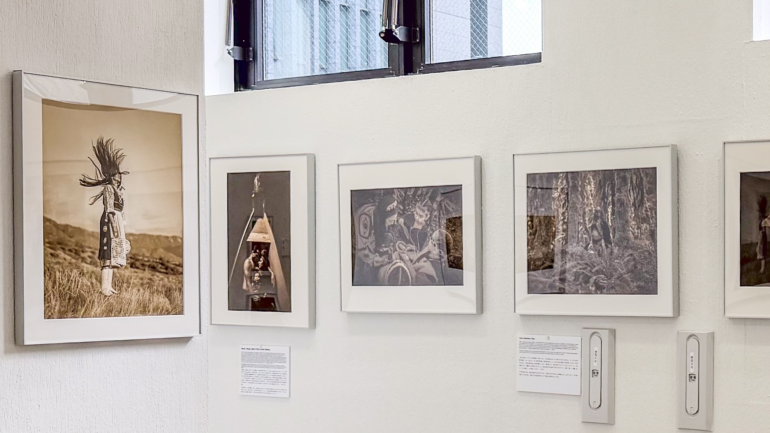
The moment I stood before Forever Free with Wind in My Hair by Zoë Marieh Urness (far left in the image above) at the Life Is Art Is Motherhood Is…
How do we learn to see?
Visual Art explores photography, painting, sculpture, installation, and other image-based practices, and the ways artists help us see with artists’ eyes, without pre-judgment, to recognize what’s been overlooked, and attend to the world with renewed care. Through interviews, essays, and exhibition features, we look at how artists transform memory, place, history, and imagination into forms that reshape our understanding of ourselves and the world.
The moment I stood before Forever Free with Wind in My Hair by Zoë Marieh Urness (far left in the image above) at the Life Is Art Is Motherhood Is…
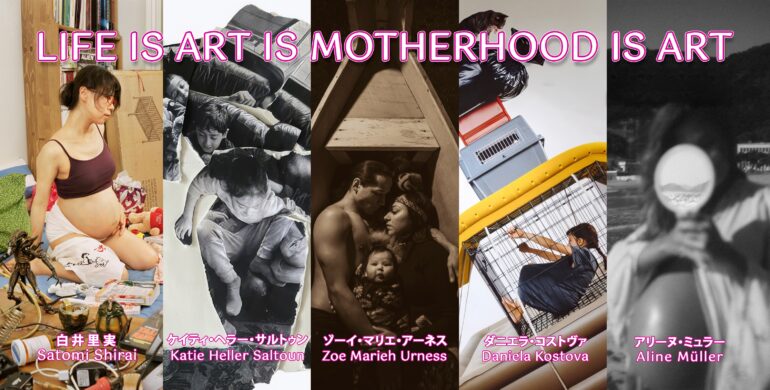
“LIFE IS ART IS MOTHERHOOD IS ART.” The title alone immediately drew me in. To me, it seemed to suggest that life itself is art, motherhood is art, everyday life is…
When I realized that I wanted to be a writer, comics criticism became an outlet for the point of view I had developed over a lifetime. In 2019 Daniel Elkin, Alex Hoffman, Ryan Carey, and I formed Fieldmouse Press.
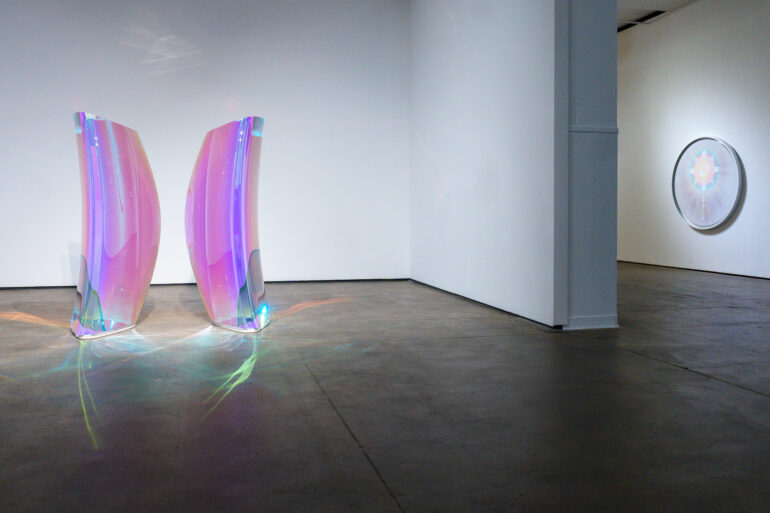
The creations of Japanese artist Mariko Mori, a respected and well-known figure in the international art world since the 1990s, have never seemed more present, needed, and timely than now. Why? In an era saturated with stimuli, her work invites us to slow down, suspend our assumptions, and enter a quieter relationship with ourselves, one another, and the world. Her art calls us back to what she simply names Radiance, the light and interconnectedness that underlie everything.
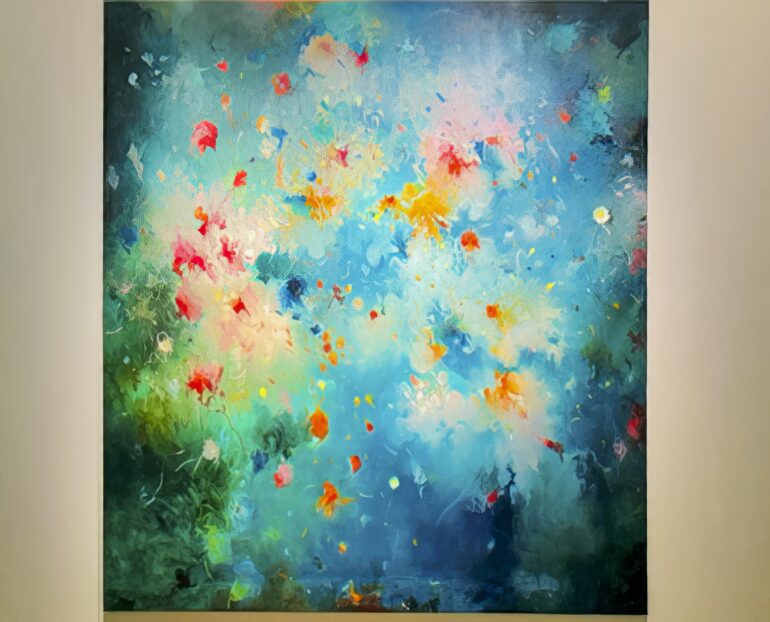
Before encountering the artworks themselves,
the moment I stepped into the venue,
I felt as though I were descending into the deep sea.
A profound stillness emerged—the kind found when one sinks toward the ocean floor, where only one’s inner pulse can be heard. I noticed my breath slowing, and I simply watched it do so. From the space itself, I sensed a quiet invitation: you can go deeper. At the same time, I felt momentarily overwhelmed by the intensity of the energy. I sat down, closed my eyes, and listened to the presence lingering in the air.
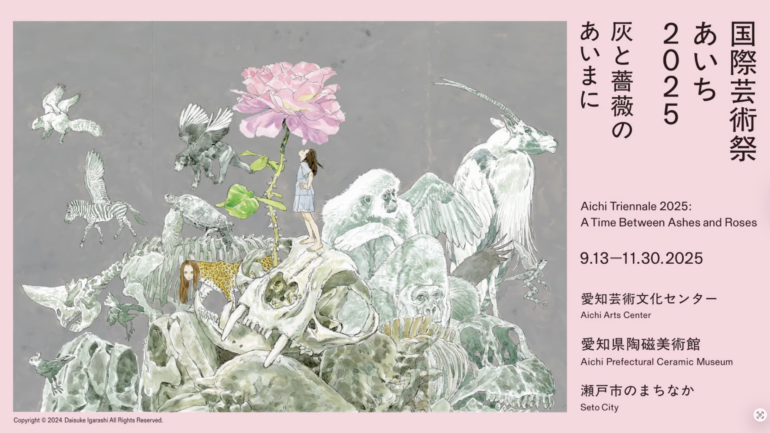
During my autumn stay in Japan, two compelling reasons drew me to the Aichi Triennale, which brought together a diverse group of non-Western artists/groups, including participants from the Middle East, Africa, and Latin America, alongside Asian artists/groups, with twenty-six from Japan, and took place in the Aichi Arts Center and Aichi Prefectural Ceramic Museum in Seto City, Japan from Sept 13 to Nov 30, 2025.
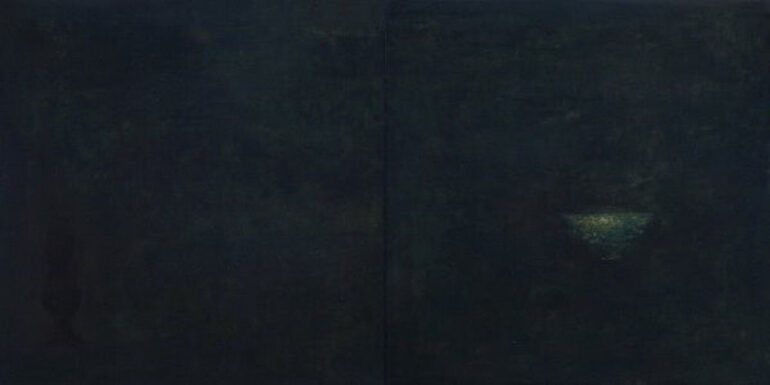 Photo © by Nguyễn Tuấn Cường
The first time I encountered one of Nguyễn Tuấn Cường's works, I found myself stunned before a canvas not characterized by richness, but by solidity. It was a painting of a bowl — an ordinary, creased enamel bowl — so realistically rendered it seemed to be living. Not polished, not idealized. It just was. Its rim chipped, its pale blue faded to something almost ghostly, the bowl rested ever so slightly askew on a darkened ground, emanating not surface light but a glow from deep within the layers of lacquer.
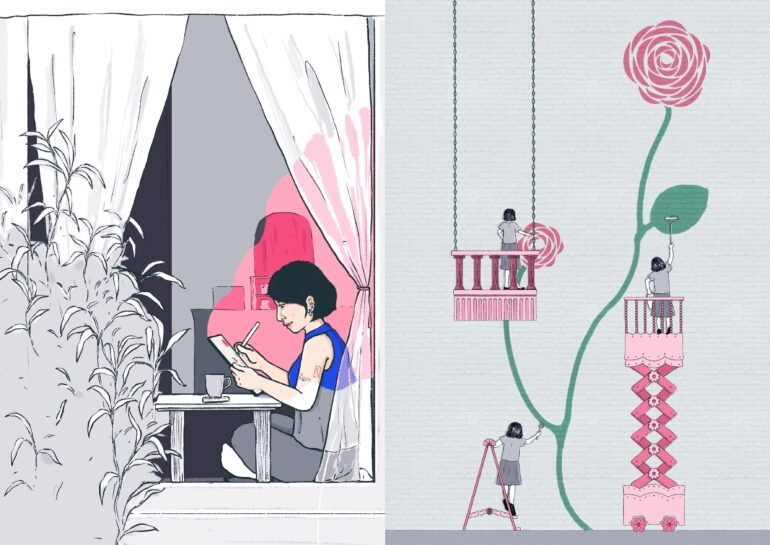 Photo © by Trà My “Emmy” Truong
I initially knew Emmy only as one of the friendly baristas at Lê Phin, the lovely little Vietnamese cafe in the East Village that I stop by nearly every day to work, meet people, and enjoy their exquisite pandan matcha lattes and coffees. As soon as we started talking, I realized she was intelligent, confident, and mature. She was actually a working artist dedicated to bringing more beauty into the world and chose to work at the cafe occasionally to learn more about the food/hospitality industry. As I became more familiar with her work, I found that I loved her artist eye, her color sense, and her approach to life and art.
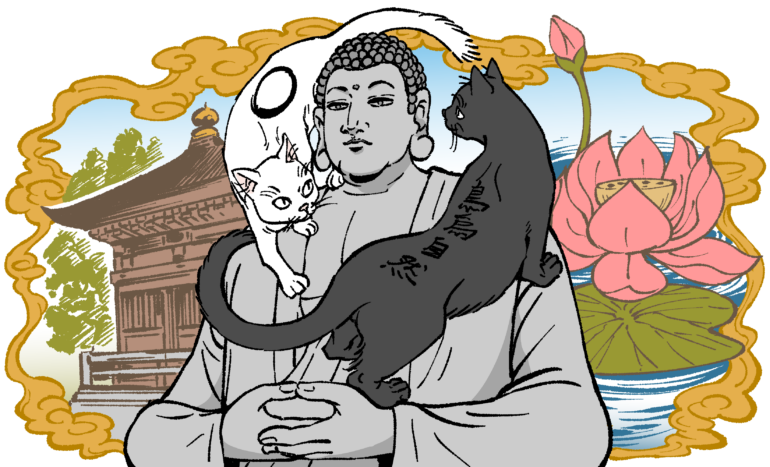 Photo © by Hiroki Otsuka
On my way from Kanazawa down to Hiroshima, I took a detour in Fukui Prefecture to visit Gotanjoji, a Sōtō Zen temple in Shoden-cho, Echizen City, known informally as a cat temple. I came for the cats, but I was also intrigued by the temple’s history, such as it is. While many temples in Japan are hundreds of years old, Gotanjoji was founded in 2002! Despite the temple's young age, its history dates back to the late 13th century Zen monk Keizan Jōkin 瑩山紹瑾, who was born in Echizen and was, I discovered, instrumental in opening Zen to women. Gotanjoji took it one step — or four? — further, bringing cats into the spiritual practice.
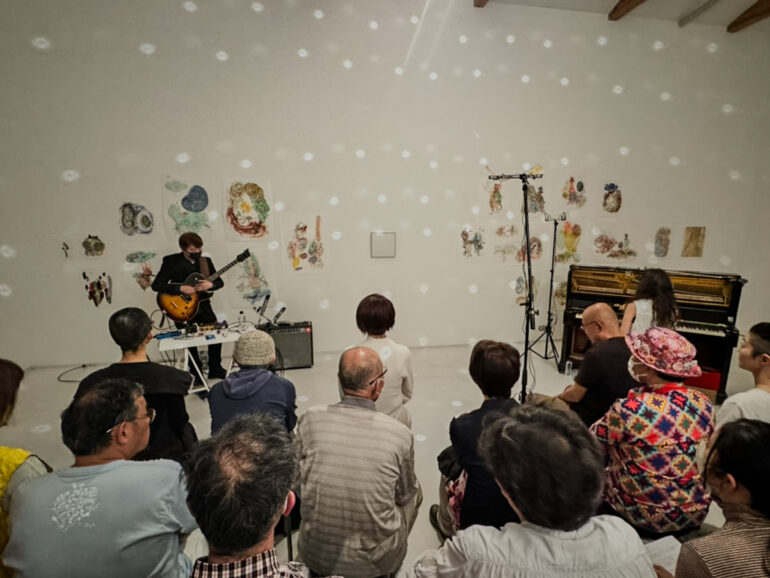 Photo © by Christopher Pelham
On my last night in Osaka, I attended the closing night reception for the solo exhibition 置き去られた鏡 The Forsaken Mirror by celebrated artist Chie Matsui 松井智惠. The performance consisted of music by avant-garde musicians sara (piano, perc.) & Shin’ichi Isohata 磯端伸 (guitar) and a poem read in Japanese, Korean, and English by Chie, Yangjah, and Miho, respectively. At first, I didn’t know what to make of the performance or the abstract, brightly colored prints surrounding a centrally hung mirror. Eventually, in the space created by the disorientation and abstraction, I reflected on who these people were, who I was, and the various identities we experience throughout life, which proved enlivening.
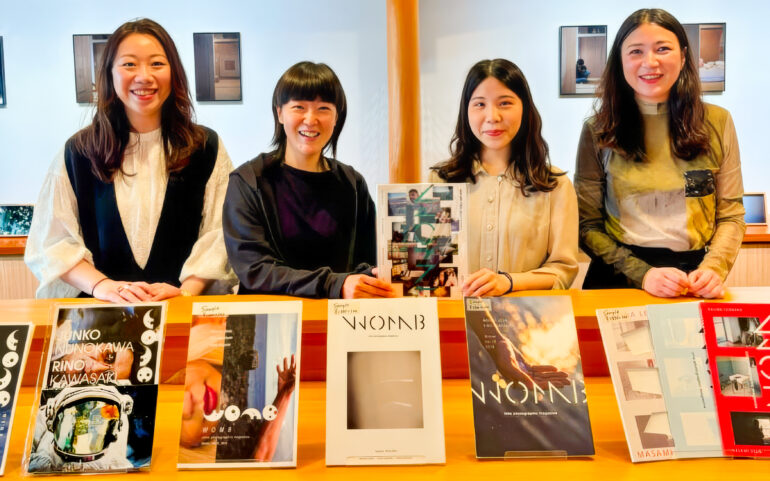
I had circled the KYOTOGRAPHIE KG+ Photographer Group WOMB’s 10th Anniversary exhibition as one not to miss. I was attracted to WOMB’s mission, which seemed to offer a feminine gaze yet take a metaphorical and expansive rather than body-centered view of a womb’s function. A small collective of Japanese female photographers who have been publishing WOMB photography magazine since September 2013, WOMB says they named their group and magazine to evoke “things that no one knows yet, a place where things are born (and grow).” Fortunately, I was able to meet two of the photographers, and among my many experiences at KYOTOGRAPHIE, this exhibition proved to be a highlight. Honestly, it was inspiring and rewarding beyond all expectations.
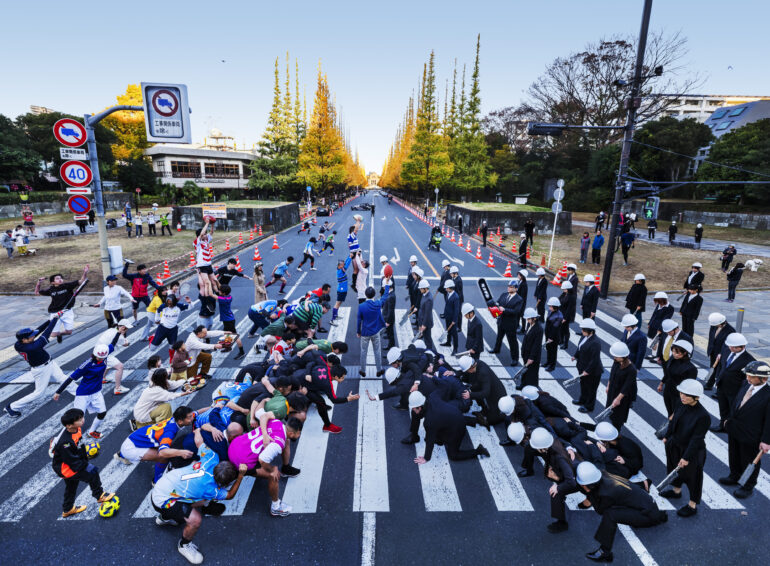 Photo © by Masahiro Usami
Masahiro Usami creates art, photographic mandalas, by undertaking a journey, as much relational as through time and space, to understand and capture the essence of a community’s journey in collaboration with that community. In his words, “Each individual photograph [in his long-running mandala series] features a central figure, all of whom come from different regions and standpoints, and then distributed in their environs are the people and things that express the world of that particular figure, just like the form of a Buddhist mandala painting.” His latest depicts the confrontation between citizens and developers over a proposed radical redevelopment of a beloved and historic park in the heart of Tokyo.