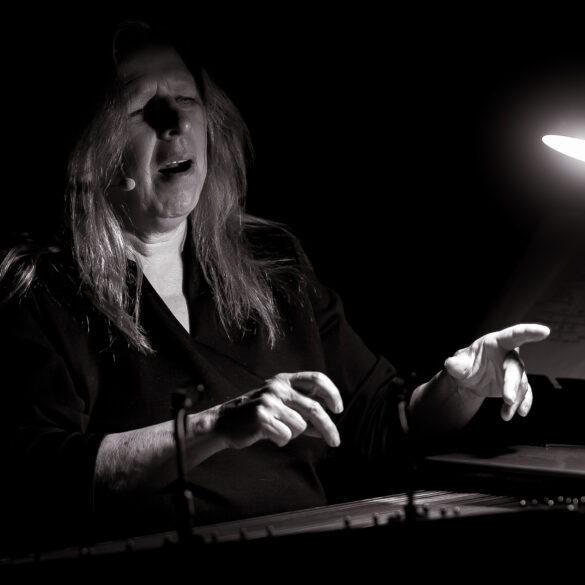
This was the only night I could conceivably visit Kanazawa, and fatefully, Sinikka was performing at the historic Mokkiriya jazz cafe and live house, founded in 1971, on this night, on tour from Norway. Meeting her in western Japan was as fortuitous as it is unlikely. Sinikka performs jazz-inflected songs inspired by the traditional music of the Forest Finns on a 39-string kantele (a kind of harp that sits horizontally on a table) that are haunting and unforgettable.
Sinikka’s singing is as clear as a bell. Yet, the purity of her voice and her decisive intonation, coupled with the dulcet sounds of her instrument, also express something profound, conveying compassion, mystery, and an ancient knowing. Gently, her music flows all around us, free of impurity and full of wonder, like a spring whose pristine and paliative waters well up from some primordial source. I wanted to know what makes Sinikka’s music so grounding, purifying, and ethereal — and what she was doing in Japan!
2025 marks the 50th anniversary of the seminal funk album Parliament's Mothership Connection.
Paul Hansen is the person who inspired me to explore this theme I call Art of Life. When we last talked on Zoom, he said something that stayed with me: artists have to find their own way to live because no two lives unfold the same way. In this interview, Paul repeated that the essence of life is a long chain of decisions made based on one's own aesthetic sense, and that is what it means to be an artist.
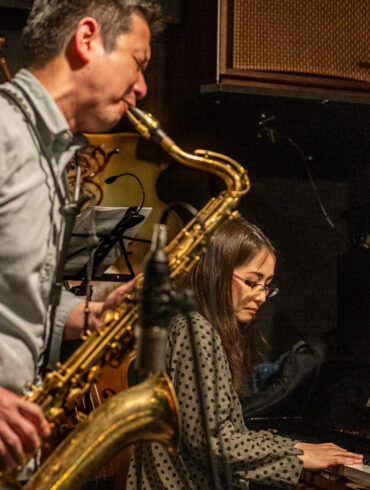
On my second night in Kyoto, I went to Candy Live Jazz in Gion to see the trio of Kotono Nishimura 西村琴乃 (alto and soprano sax), Yuka Yanagihara 柳原由佳 (piano), and Ayuko Ikeda 池田安友子(percussion). I was not familiar with any of them, but from the start, I found their set, inspired by the spring season, infectious, rhythmically adventurous, and uplifting.
At times, most notably during Kotono’s number “Milky Way” from her album “Favorable Move,” I felt as if I’d been transported to a landscape untarnished by humans, where dawn is breaking over mountains in a river-fed valley of verdant splendor where you can hear birds singing and take a breath, like in a Thomas Cole painting, a place where you can look up on a clear, moonless night and be awestruck by the majesty of the Milky Way, so far away and yet seemingly so close.
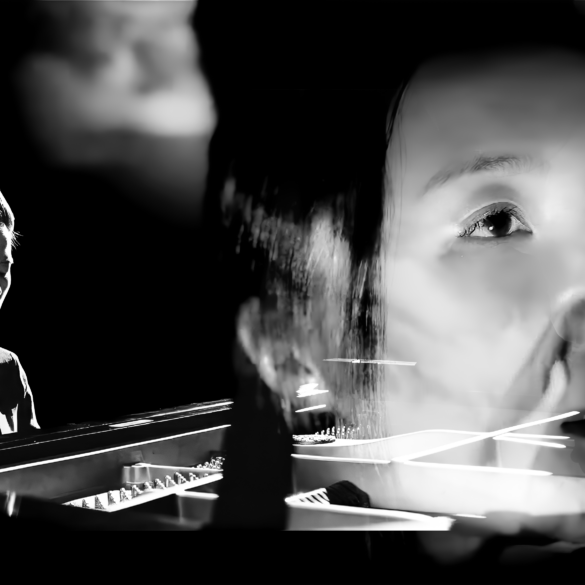
Photo © by Eunbi Kim – collage of stills from the official music video for Eunbi Kim's "Saturn Years"This spring I had the pleasure of attending two uplifting events led by genre-fluid pianist Eunbi Kim at the National Arts Club, where she is one of 14 2023/2024 National Arts Club Artist Fellows. Rather than presenting formal concerts, Eunbi (she/her) created a series of gatherings. This approach suited the Club’s intimate spaces and allowed her to work interactively with the audience, sharing how music and mindfulness practice can work together to connect and heal us.
The two gatherings I attended, “How to Love” on March 6 and “Deep Listening” on May 19, each incorporated live music, talking, and visual elements. Eunbi cast the audience as improvisational partners, enabling them to explore the nexus of music and meditation along with her.
Talking to Dae feels like rewiring my thoughts. When he described the connection between philosophy and music, I immediately related to his lived experience. That is exactly what I have been searching for in music—and how I practice both philosophy and life.
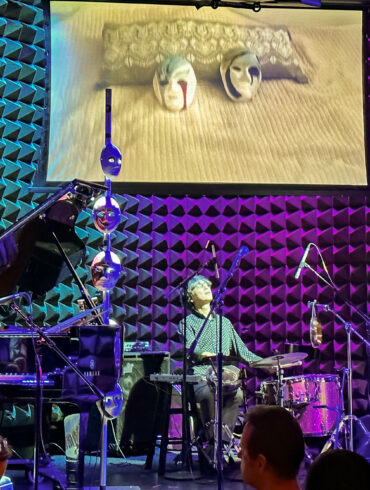
Through music, dance, and conscious exploration, Sita Chay’s “When My Exile Sees Me,” presented May 20, 2023 at Joe’s Pub, creates a loving and accepting space to invite healing and acceptance of all our inner exiled parts.
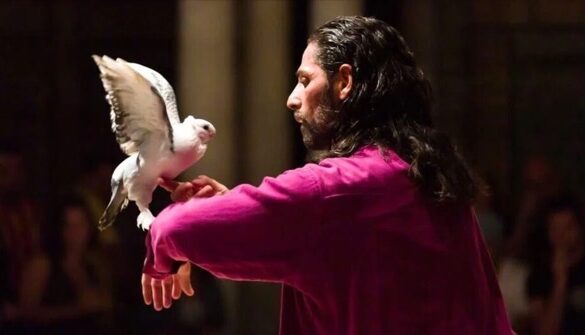
At the Aichi Triennale 2025, one experience stood out as a shared highlight for our group of thirteen: Bird by the brother-and-sister team Selma and Sofiane Ouissi. Doves make no effort to “collaborate” or to “create a good work.” For this reason, Sofiane must have needed a radically different reconstruction of bodily context than in dancing solo or with another human. That was what I wanted to witness.
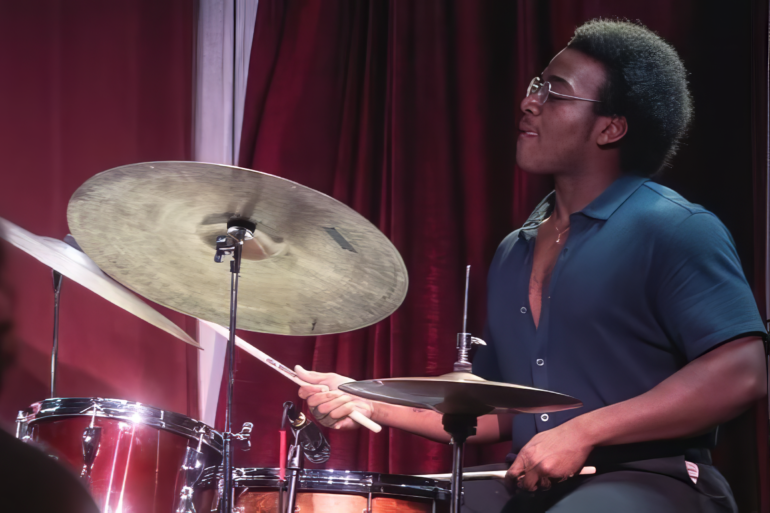
Rema Hasumi’s music rises to higher ground, but it navigates deep and turbulent waters to get there. That journey has taken on new dimensions in recent years, as her journey through motherhood has reshaped both her life and art, leading to the release of her new album, Mothers.
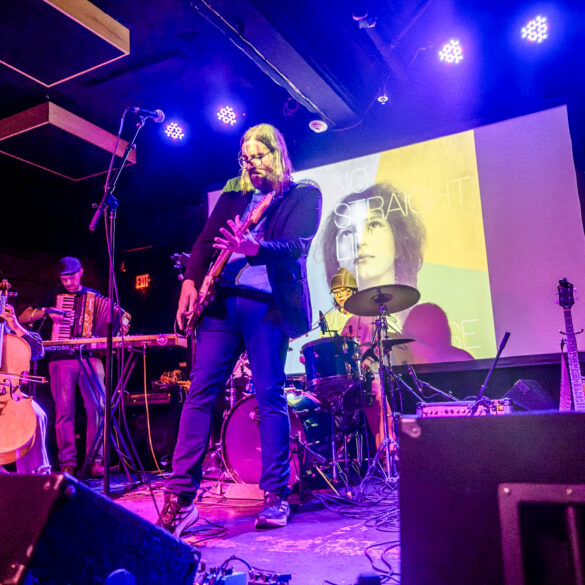
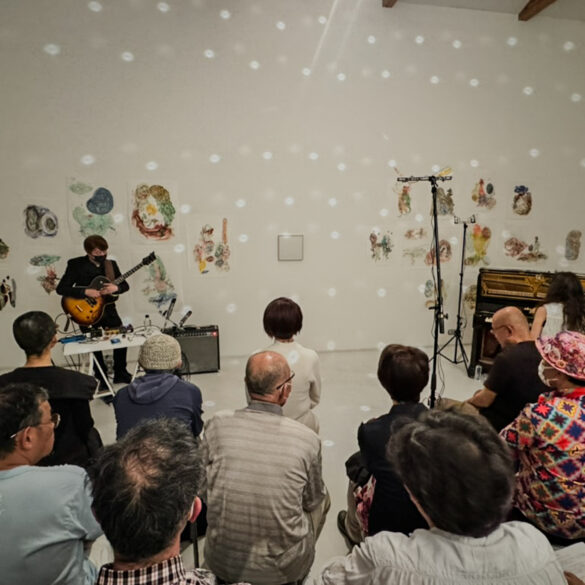
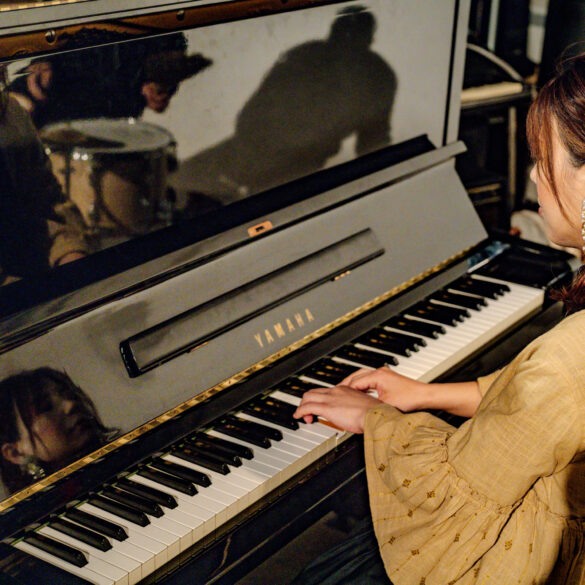
On my last night in Osaka, I attended the closing night reception for the solo exhibition 置き去られた鏡 The Forsaken Mirror by celebrated artist Chie Matsui 松井智惠. The performance consisted of music by avant-garde musicians sara (piano, perc.) & Shin’ichi Isohata 磯端伸 (guitar) and a poem read in Japanese, Korean, and English by Chie, Yangjah, and Miho, respectively. At first, I didn’t know what to make of the performance or the abstract, brightly colored prints surrounding a centrally hung mirror. Eventually, in the space created by the disorientation and abstraction, I reflected on who these people were, who I was, and the various identities we experience throughout life, which proved enlivening.
While struggling to find contemporary jazz venues in Osaka, I stumbled upon Studio T-Bone, a venue supporting both live jazz and photography and decided to visit. Pianist Yukari Sekiya 関谷 友加里 and percussionist Naoto Yamagishi 山㟁直人 やまぎしなおと were improvising together. While I didn't manage to get to know them well on that occasion, I was delighted to spend time with the creative family members running the studio. A chance encounter months later unexpectedly brought Yukari back into my mind. When I reached out to her, she responded, and I've now learned what a deep and inspiring artist and person she is, opening the door to possible future collaborations. It was a powerful reminder that we can't always see right away why our intuition speaks to us. Sometimes, it may be setting something in motion far in the future or for a purpose quite different from what we imagine.
My encounter with the well-known — but new to me — pianist Hitomi Nishiyama 西山瞳 at SUB Jazz Cafe, a seminal jazz club in Osaka, took me to places I never expected. Although she was playing jazz standards with a makeshift band, her music and career, characterized by curious changes in direction and exquisite elaborations on connections previously unrecognized, set us free.