
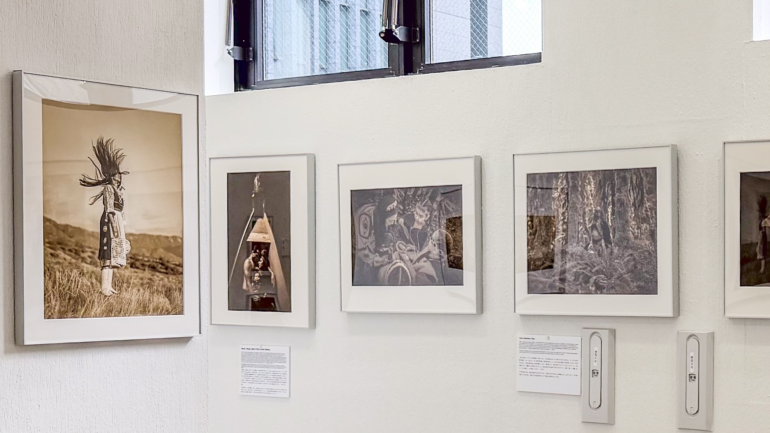
風の中に息づくもの — 「時間」からの解放と体験への誘い』
ゾーイ・マリエ・アーネスの作…
How do we learn to see?
Visual Art explores photography, painting, sculpture, installation, and other image-based practices, and the ways artists help us see with artists’ eyes, without pre-judgment, to recognize what’s been overlooked, and attend to the world with renewed care. Through interviews, essays, and exhibition features, we look at how artists transform memory, place, history, and imagination into forms that reshape our understanding of ourselves and the world.
ゾーイ・マリエ・アーネスの作…
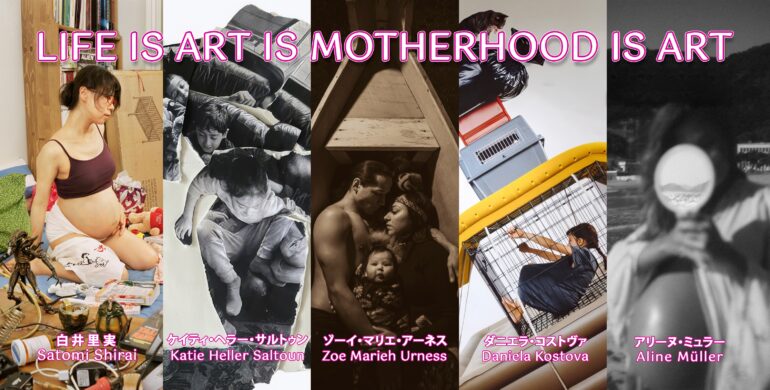
「人生は芸術であり、母である…
自分が作家になりたいと気づいたとき、コミック批評は私が生涯をかけて培ってきた視点の出口となりました。2019年、ダニエル・エルキン、アレックス・ホフマン、ライアン・キャリー、そして私の4人でフィールドマウス・プレス(Fieldmouse Press)を設立しました。
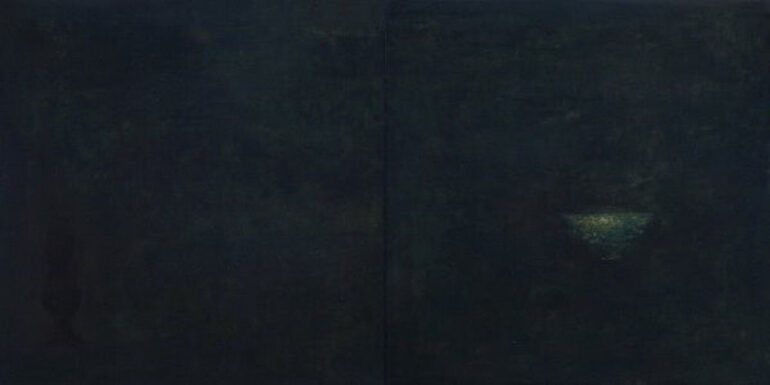 Photo © by Nguyễn Tuấn Cường
The first time I encountered one of Nguyễn Tuấn Cường's works, I found myself stunned before a canvas not characterized by richness, but by solidity. It was a painting of a bowl — an ordinary, creased enamel bowl — so realistically rendered it seemed to be living. Not polished, not idealized. It just was. Its rim chipped, its pale blue faded to something almost ghostly, the bowl rested ever so slightly askew on a darkened ground, emanating not surface light but a glow from deep within the layers of lacquer.
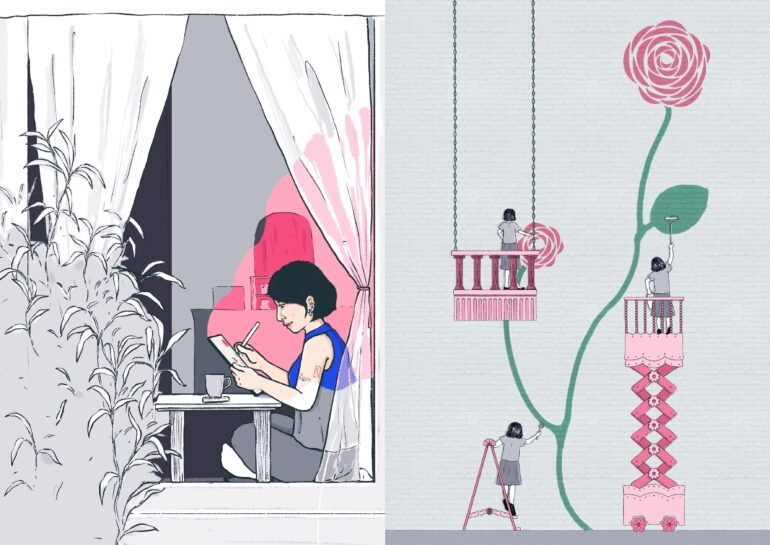 Photo © by Trà My “Emmy” Truong
I initially knew Emmy only as one of the friendly baristas at Lê Phin, the lovely little Vietnamese cafe in the East Village that I stop by nearly every day to work, meet people, and enjoy their exquisite pandan matcha lattes and coffees. As soon as we started talking, I realized she was intelligent, confident, and mature. She was actually a working artist dedicated to bringing more beauty into the world and chose to work at the cafe occasionally to learn more about the food/hospitality industry. As I became more familiar with her work, I found that I loved her artist eye, her color sense, and her approach to life and art.
 Photo © by Hiroki Otsuka
On my way from Kanazawa down to Hiroshima, I took a detour in Fukui Prefecture to visit Gotanjoji, a Sōtō Zen temple in Shoden-cho, Echizen City, known informally as a cat temple. I came for the cats, but I was also intrigued by the temple’s history, such as it is. While many temples in Japan are hundreds of years old, Gotanjoji was founded in 2002! Despite the temple's young age, its history dates back to the late 13th century Zen monk Keizan Jōkin 瑩山紹瑾, who was born in Echizen and was, I discovered, instrumental in opening Zen to women. Gotanjoji took it one step — or four? — further, bringing cats into the spiritual practice.
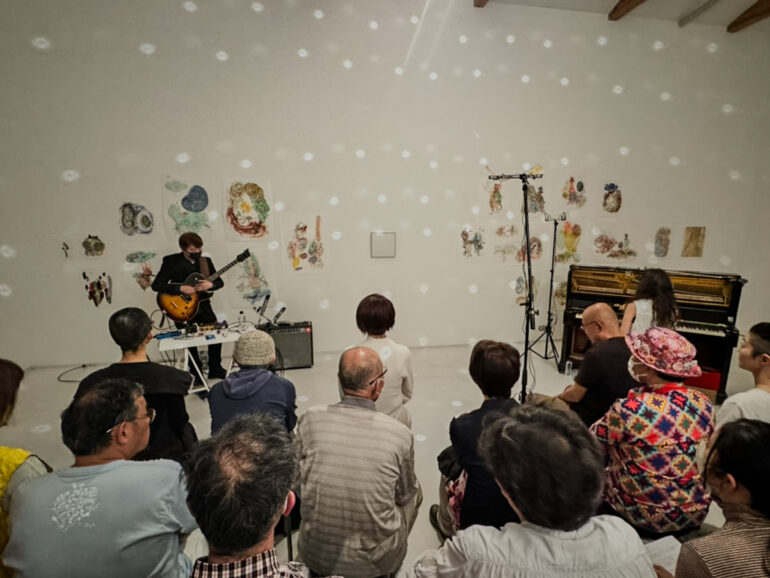 Photo © by Christopher Pelham
On my last night in Osaka, I attended the closing night reception for the solo exhibition 置き去られた鏡 The Forsaken Mirror by celebrated artist Chie Matsui 松井智惠. The performance consisted of music by avant-garde musicians sara (piano, perc.) & Shin’ichi Isohata 磯端伸 (guitar) and a poem read in Japanese, Korean, and English by Chie, Yangjah, and Miho, respectively. At first, I didn’t know what to make of the performance or the abstract, brightly colored prints surrounding a centrally hung mirror. Eventually, in the space created by the disorientation and abstraction, I reflected on who these people were, who I was, and the various identities we experience throughout life, which proved enlivening.
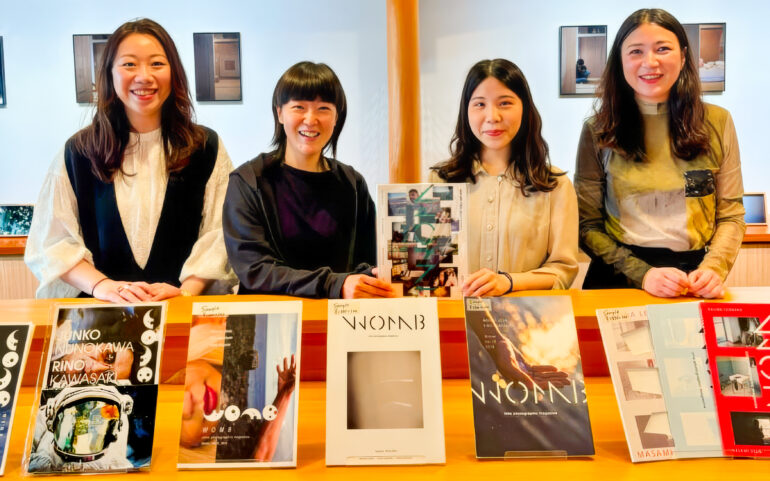
I had circled the KYOTOGRAPHIE KG+ Photographer Group WOMB’s 10th Anniversary exhibition as one not to miss. I was attracted to WOMB’s mission, which seemed to offer a feminine gaze yet take a metaphorical and expansive rather than body-centered view of a womb’s function. A small collective of Japanese female photographers who have been publishing WOMB photography magazine since September 2013, WOMB says they named their group and magazine to evoke “things that no one knows yet, a place where things are born (and grow).” Fortunately, I was able to meet two of the photographers, and among my many experiences at KYOTOGRAPHIE, this exhibition proved to be a highlight. Honestly, it was inspiring and rewarding beyond all expectations.
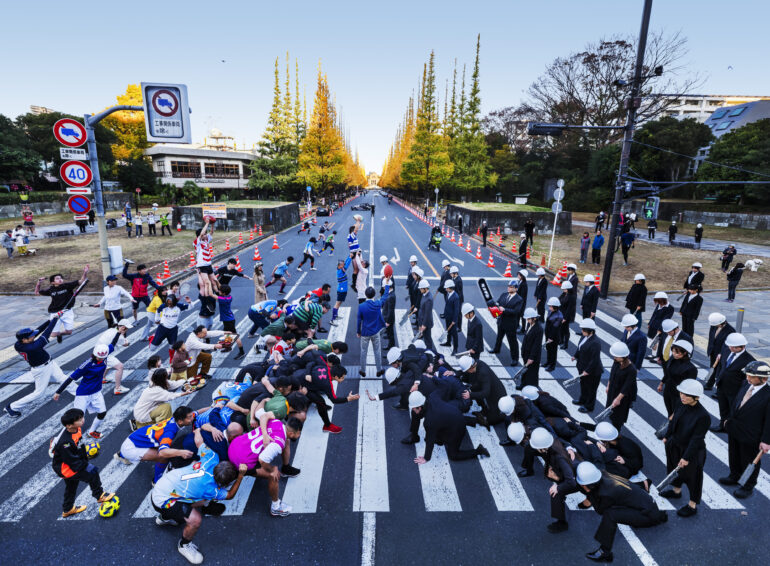 Photo © by Masahiro Usami
Masahiro Usami creates art, photographic mandalas, by undertaking a journey, as much relational as through time and space, to understand and capture the essence of a community’s journey in collaboration with that community. In his words, “Each individual photograph [in his long-running mandala series] features a central figure, all of whom come from different regions and standpoints, and then distributed in their environs are the people and things that express the world of that particular figure, just like the form of a Buddhist mandala painting.” His latest depicts the confrontation between citizens and developers over a proposed radical redevelopment of a beloved and historic park in the heart of Tokyo.
 Photo © by Valentina Benigni
One of the exhibitions I most enjoyed visiting during my all-too-brief stay in beautiful Arles, France to take in the Les Rencontres D’Arles de la Photographie was not in the festival at all. Instead, Valentina Benigni’s solo exhibition “Dancing Vulnerability” was a part of the concurrent Festival Off Arles.
With 26 exhibitions, some quite large, scattered around Arles, Les Rencontres D’Arles did not leave me much time in my brief stay to check out other shows, many of which I hurriedly passed by. However, Valentina’s exhibition announcement posted on the street featuring a brilliant photograph of what looked like a flamenco dancer with skirt awhirl cried out to me.
 Photo © by anonymous photographer
I was excited to explore Kyotographie, the sprawling annual international photography festival in Kyoto. Now in its 12th year, it has become one of Asia’s largest photography festivals. It features 13 curated main exhibitions and more than 100 KG+, KG Select, and Special exhibitions installed in venues large and small all over Kyoto. One of the exhibitions I was most keen to visit was “You Don’t Die — The Story of Yet Another Iranian Uprising,” an exhibition at Sfera culled from 1000s of mostly anonymous images of the “Woman, Life, Freedom” uprising inside Iran, collected and authenticated by Le Monde photo editor Marie Sumalla and Le Monde journalist Ghazal Golshiri. With the assistance of Iranian colleagues Payam Elhami and Farzad Seifikaran, they established the date and location of each photo. Photographs by several professional Iranian photographers inside Iran also appeared in the exhibition.
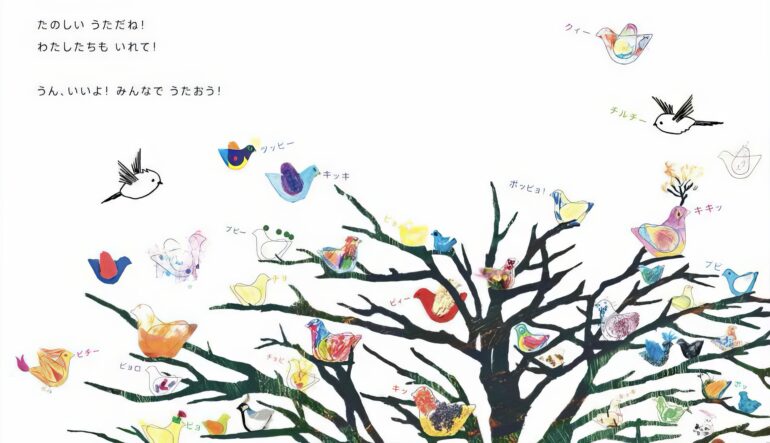
A visit to MUSE (Music Unites Special Education), a certified NPO founded in Sendai City by pianist Atsuko Nishina in 2001 to increase the opportunities for people with special needs to touch highly artistic music and art and express themselves freely through artistic creative activities, with composer Aya Nishina 仁科彩 and her partner, the visual artist Shimpei Takeda 武田慎平, afforded me the opportunity to understand their creative work more deeply and to recognize that their art and their teaching work, while different in form, have the same purpose, each informed by and expressing the same universal spiritual principles that, in fact, guide all true healing work.