Christopher Pelham

Christopher Pelham

Christopher Pelham is Director and co-founder of CRS (Center for Remembering & Sharing), an organization based in NYC and Tokyo that offers healing, arts, and cultural programming. He is the Editor of onlylove.art as well as a healer, curator/producer, writer, photographer, and videographer with a background in theater and dance. He has a degree in English with a concentration in 20th-century and postcolonial literature from Duke University.

反復と啓示:タラ・P・ニェンジェの「スパークリング・シアター」

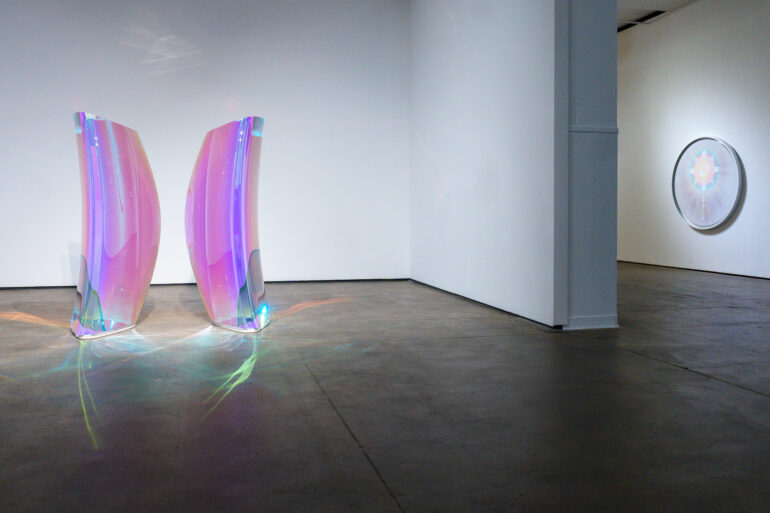
Qing Bai: Innocence

ニューヨークでアジア人主導の演劇が急増している今、演出家で劇作家のタラ・ニェンジェは、独自の輝かしい道を切り拓いています。作品だけでなく組織をも構築する新世代の一人として、彼女とその協力者たちは、現代演劇のあり方――切実で、身体的で、紛れもなく生き生きとしたもの――を再構築しています。

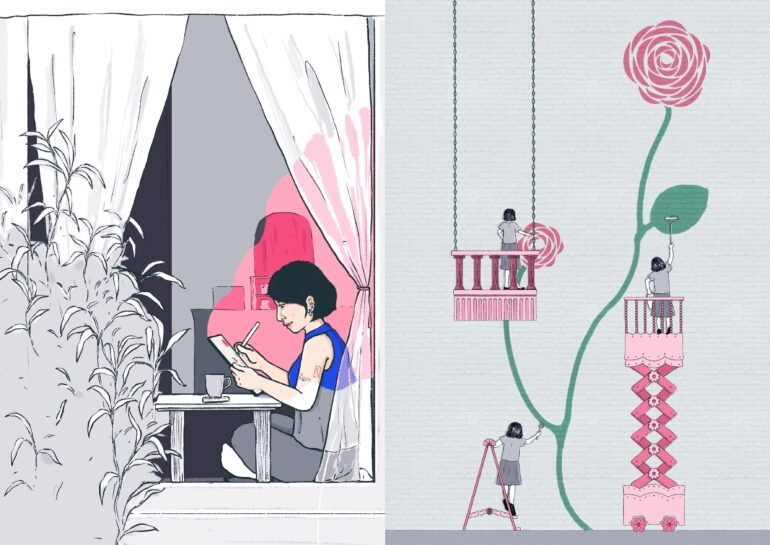
Trà My “Emmy” Truong: The Constant Gardener

Photo © by Trà My “Emmy” Truong

I initially knew Emmy only as one of the friendly baristas at Lê Phin, the lovely little Vietnamese cafe in the East Village that I stop by nearly every day to work, meet people, and enjoy their exquisite pandan matcha lattes and coffees. As soon as we started talking, I realized she was intelligent, confident, and mature. She was actually a working artist dedicated to bringing more beauty into the world and chose to work at the cafe occasionally to learn more about the food/hospitality industry. As I became more familiar with her work, I found that I loved her artist eye, her color sense, and her approach to life and art.

Finding Freedom in Music & Motherhood — Yukari Sekiya 関谷 友加里 at Studio T-Bone, Osaka (4/19/24)

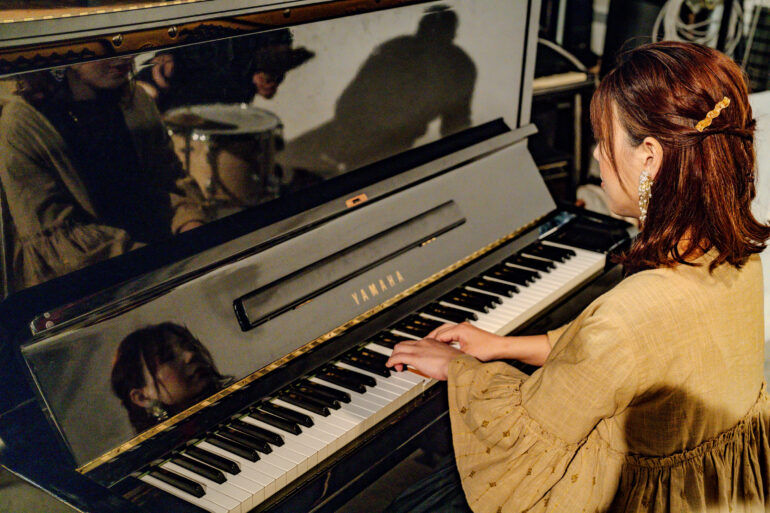
Yukari Sekiya (p) at Studio T-Bone, OsakaPhoto © by Christopher Pelham

While struggling to find contemporary jazz venues in Osaka, I stumbled upon Studio T-Bone, a venue supporting both live jazz and photography and decided to visit. Pianist Yukari Sekiya 関谷 友加里 and percussionist Naoto Yamagishi 山㟁直人 やまぎしなおと were improvising together. While I didn't manage to get to know them well on that occasion, I was delighted to spend time with the creative family members running the studio. A chance encounter months later unexpectedly brought Yukari back into my mind. When I reached out to her, she responded, and I've now learned what a deep and inspiring artist and person she is, opening the door to possible future collaborations. It was a powerful reminder that we can't always see right away why our intuition speaks to us. Sometimes, it may be setting something in motion far in the future or for a purpose quite different from what we imagine.

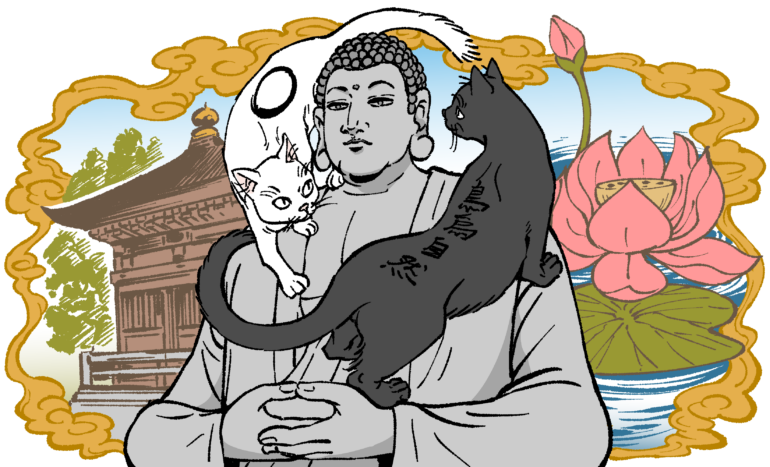
Gotanjoji — A Temple Where the Cats Are Teachers, Too (April 22, 2024)

Gotanjoji illustration copyright © 2025 by Hiroki OtsukaPhoto © by Hiroki Otsuka

On my way from Kanazawa down to Hiroshima, I took a detour in Fukui Prefecture to visit Gotanjoji, a Sōtō Zen temple in Shoden-cho, Echizen City, known informally as a cat temple. I came for the cats, but I was also intrigued by the temple’s history, such as it is. While many temples in Japan are hundreds of years old, Gotanjoji was founded in 2002! Despite the temple's young age, its history dates back to the late 13th century Zen monk Keizan Jōkin 瑩山紹瑾, who was born in Echizen and was, I discovered, instrumental in opening Zen to women. Gotanjoji took it one step — or four? — further, bringing cats into the spiritual practice.

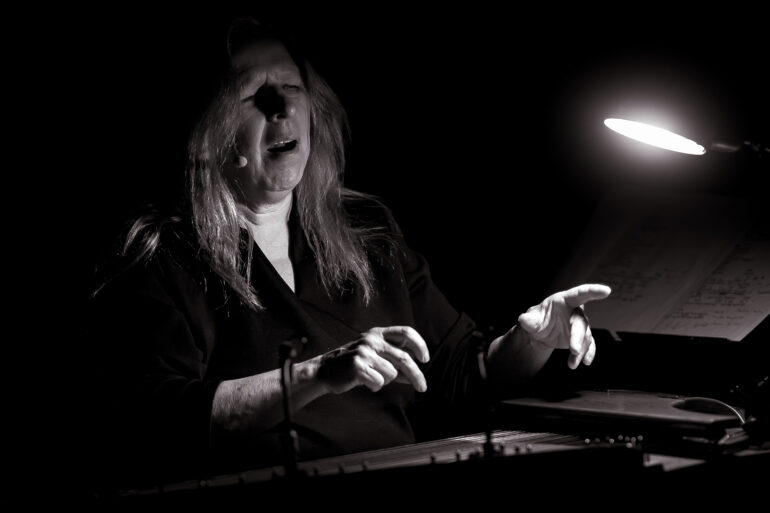
Sinikka Langeland — Channeling the Spirits of the Forest at Mokkiriya, Kanazawa, 4/21/24

Sinikka Langeland at Mokkiriya, Kanzawa 4/21/24Photo © by Christopher Pelham

This was the only night I could conceivably visit Kanazawa, and fatefully, Sinikka was performing at the historic Mokkiriya jazz cafe and live house, founded in 1971, on this night, on tour from Norway. Meeting her in western Japan was as fortuitous as it is unlikely. Sinikka performs jazz-inflected songs inspired by the traditional music of the Forest Finns on a 39-string kantele (a kind of harp that sits horizontally on a table) that are haunting and unforgettable.

Sinikka’s singing is as clear as a bell. Yet, the purity of her voice and her decisive intonation, coupled with the dulcet sounds of her instrument, also express something profound, conveying compassion, mystery, and an ancient knowing. Gently, her music flows all around us, free of impurity and full of wonder, like a spring whose pristine and paliative waters well up from some primordial source. I wanted to know what makes Sinikka’s music so grounding, purifying, and ethereal — and what she was doing in Japan!

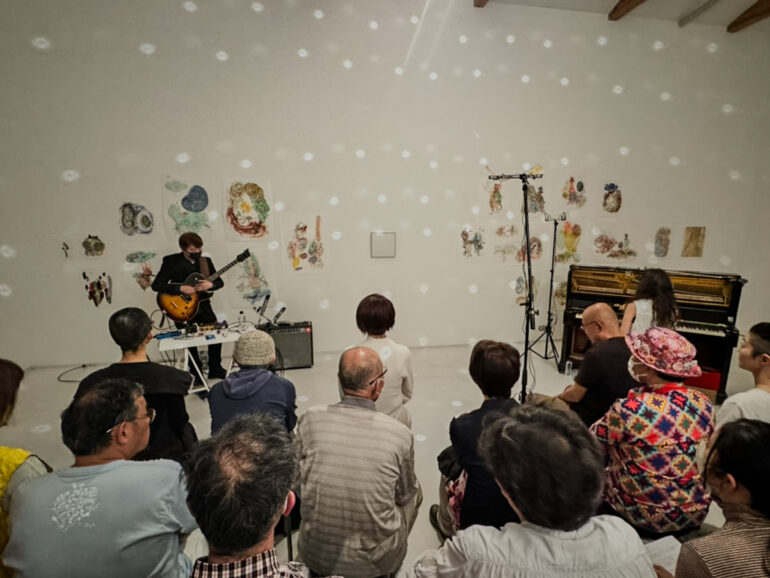
置き去られた鏡 The Forsaken Mirror by Chie Matsui 松井智惠 at Gallery Nomart, Osaka 4/20/24

Shin'ichi Isohata 磯端伸 (guitar) & sara (piano, perc.) performing at the closing reception for Chie Matsui's exhibition 置き去られた鏡 The Forsaken Mirror at Gallery Nomart, Osaka, 4/20/24Photo © by Christopher Pelham

On my last night in Osaka, I attended the closing night reception for the solo exhibition 置き去られた鏡 The Forsaken Mirror by celebrated artist Chie Matsui 松井智惠. The performance consisted of music by avant-garde musicians sara (piano, perc.) & Shin’ichi Isohata 磯端伸 (guitar) and a poem read in Japanese, Korean, and English by Chie, Yangjah, and Miho, respectively. At first, I didn’t know what to make of the performance or the abstract, brightly colored prints surrounding a centrally hung mirror. Eventually, in the space created by the disorientation and abstraction, I reflected on who these people were, who I was, and the various identities we experience throughout life, which proved enlivening.

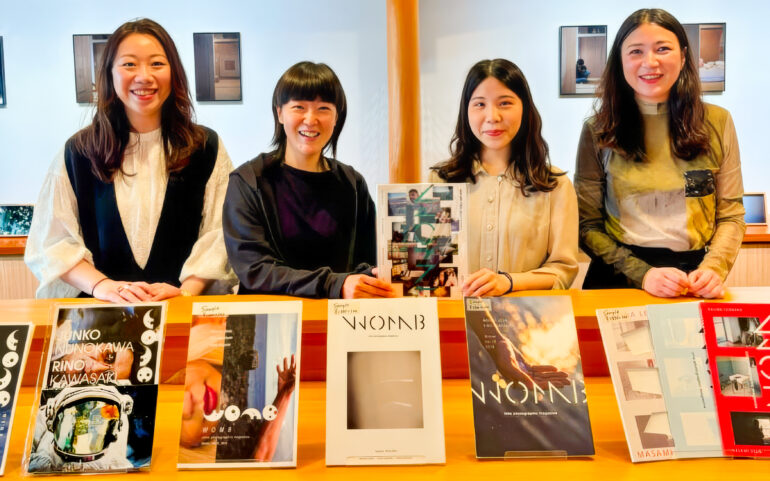
KYOTOGRAPHIE KG+ Photographer Group “WOMB” (Masami Ueda, Rino Kawasaki, Kalina Leonard, Sana Kohmoto) 10th Anniversary Exhibition (April 26, 2024)

WOMB photographers Masami Ueda, Rino Kawasaki, Sana Kohmoto, and Kalina Leonard in front of the exhibit of WOMB magazines and photo books at their 10th anniversary exhibition at the Kyoto Museum of Photography

I had circled the KYOTOGRAPHIE KG+ Photographer Group WOMB’s 10th Anniversary exhibition as one not to miss. I was attracted to WOMB’s mission, which seemed to offer a feminine gaze yet take a metaphorical and expansive rather than body-centered view of a womb’s function. A small collective of Japanese female photographers who have been publishing WOMB photography magazine since September 2013, WOMB says they named their group and magazine to evoke “things that no one knows yet, a place where things are born (and grow).” Fortunately, I was able to meet two of the photographers, and among my many experiences at KYOTOGRAPHIE, this exhibition proved to be a highlight. Honestly, it was inspiring and rewarding beyond all expectations.

Asuca Hayashi 林明日香 — Song of the Earth, Tokyo (May 5, 2024)

Asuca Hayashi at MIFA Football Cafe, May 5, 2024Photo © by Christopher Pelham

On a sunny 5th of May — Children’s Day in Japan — I made my way to what seemed like an unlikely venue, Mifa Football Cafe, for a matinee child/family-friendly concert and luncheon called “Song of the Earth,” organized by the J-Pop singer Asuca Hayashi 林明日香. Mifa is located in Toyosu, one of a series of artificial islands in Tokyo Bay just southeast of the former Tsukuji Fish Market in Tokyo, a strange but fitting location. Both Asuca and the people of Tokyo were charting a new course in pursuit of more healthy, sustainable lives.

The Sound of Freedom: Pianist Hitomi Nishiyama at SUB (Osaka, 4/18/24)

Ro Hasegawa 長谷川朗and Hitomi Nishiyama 西山瞳 at Sub Jazz Cafe, 4/19/24Photo © by Christopher Pelham

My encounter with the well-known — but new to me — pianist Hitomi Nishiyama 西山瞳 at SUB Jazz Cafe, a seminal jazz club in Osaka, took me to places I never expected. Although she was playing jazz standards with a makeshift band, her music and career, characterized by curious changes in direction and exquisite elaborations on connections previously unrecognized, set us free.

KYOTOGRAPHIE KG+ Select: Masahiro Usami’s (宇佐美雅浩) Community Manda-las (April 17, 2024)

「 Silent Rugger Men, Jingu Gaien 2023 」by Masahiro UsamiPhoto © by Masahiro Usami

Masahiro Usami creates art, photographic mandalas, by undertaking a journey, as much relational as through time and space, to understand and capture the essence of a community’s journey in collaboration with that community. In his words, “Each individual photograph [in his long-running mandala series] features a central figure, all of whom come from different regions and standpoints, and then distributed in their environs are the people and things that express the world of that particular figure, just like the form of a Buddhist mandala painting.” His latest depicts the confrontation between citizens and developers over a proposed radical redevelopment of a beloved and historic park in the heart of Tokyo.