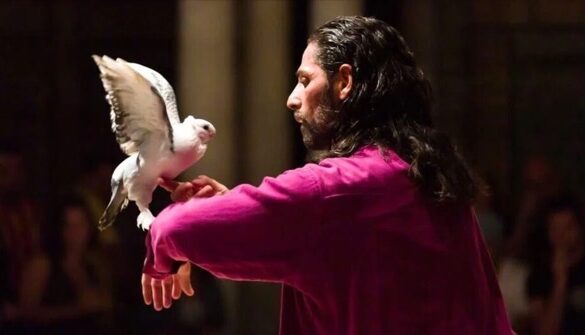
At the Aichi Triennale 2025, one experience stood out as a shared highlight for our group of thirteen: Bird by the brother-and-sister team Selma and Sofiane Ouissi. Doves make no effort to “collaborate” or to “create a good work.” For this reason, Sofiane must have needed a radically different reconstruction of bodily context than in dancing solo or with another human. That was what I wanted to witness.
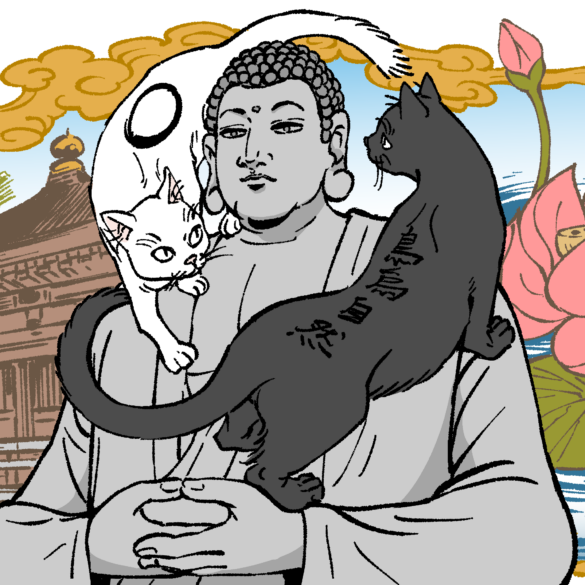
Photo © by Hiroki OtsukaOn my way from Kanazawa down to Hiroshima, I took a detour in Fukui Prefecture to visit Gotanjoji, a Sōtō Zen temple in Shoden-cho, Echizen City, known informally as a cat temple. I came for the cats, but I was also intrigued by the temple’s history, such as it is. While many temples in Japan are hundreds of years old, Gotanjoji was founded in 2002! Despite the temple's young age, its history dates back to the late 13th century Zen monk Keizan Jōkin 瑩山紹瑾, who was born in Echizen and was, I discovered, instrumental in opening Zen to women. Gotanjoji took it one step — or four? — further, bringing cats into the spiritual practice.
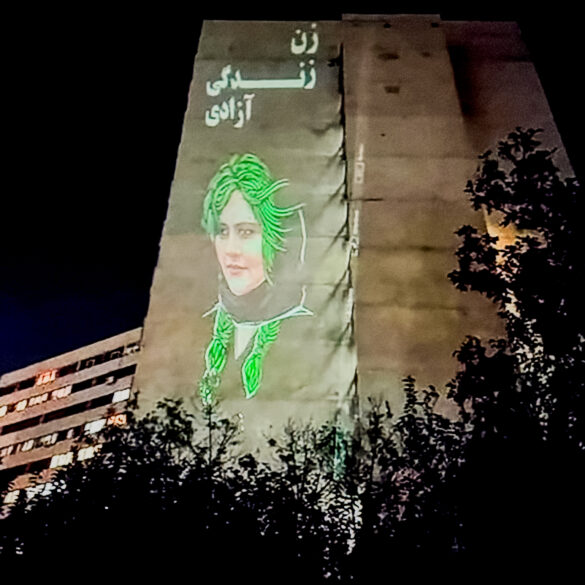
I was excited to explore Kyotographie, the sprawling annual international photography festival in Kyoto. Now in its 12th year, it has become one of Asia’s largest photography festivals. It features 13 curated main exhibitions and more than 100 KG+, KG Select, and Special exhibitions installed in venues large and small all over Kyoto. One of the exhibitions I was most keen to visit was “You Don’t Die — The Story of Yet Another Iranian Uprising,” an exhibition at Sfera culled from 1000s of mostly anonymous images of the “Woman, Life, Freedom” uprising inside Iran, collected and authenticated by Le Monde photo editor Marie Sumalla and Le Monde journalist Ghazal Golshiri. With the assistance of Iranian colleagues Payam Elhami and Farzad Seifikaran, they established the date and location of each photo. Photographs by several professional Iranian photographers inside Iran also appeared in the exhibition.
During my autumn stay in Japan, two compelling reasons drew me to the Aichi Triennale, which brought together a diverse group of non-Western artists/groups, including participants from the Middle East, Africa, and Latin America, alongside Asian artists/groups, with twenty-six from Japan, and took place in the Aichi Arts Center and Aichi Prefectural Ceramic Museum in Seto City, Japan from Sept 13 to Nov 30, 2025.
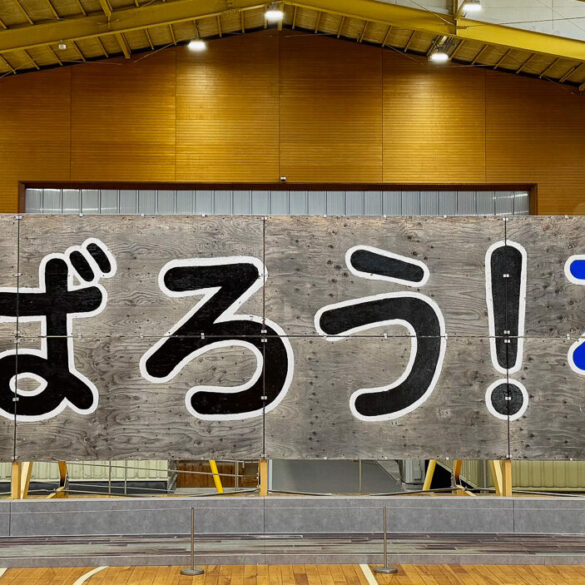
This large sign, emblazoned with the words がんばろう!石巻 meaning Let’s Go, Ishinomaki, was found placed in the ruins of downtown...
Before encountering the artworks themselves,
the moment I stepped into the venue,
I felt as though I were descending into the deep sea.
A profound stillness emerged—the kind found when one sinks toward the ocean floor, where only one’s inner pulse can be heard. I noticed my breath slowing, and I simply watched it do so. From the space itself, I sensed a quiet invitation: you can go deeper. At the same time, I felt momentarily overwhelmed by the intensity of the energy. I sat down, closed my eyes, and listened to the presence lingering in the air.
No More Content