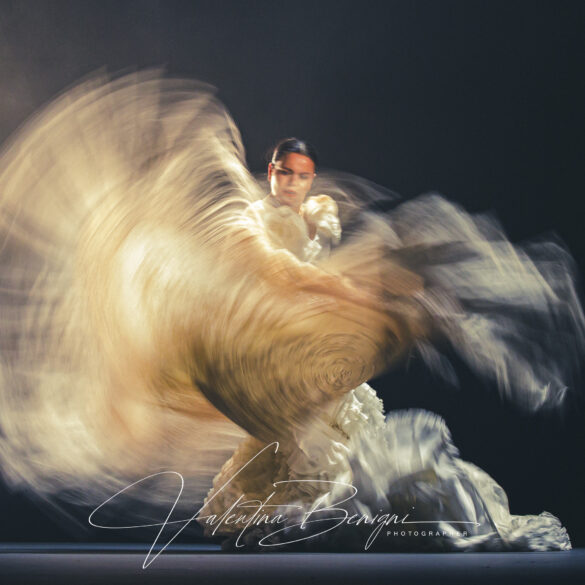
One of the exhibitions I most enjoyed visiting during my all-too-brief stay in beautiful Arles, France to take in the Les Rencontres D’Arles de la Photographie was not in the festival at all. Instead, Valentina Benigni’s solo exhibition “Dancing Vulnerability” was a part of the concurrent Festival Off Arles.
With 26 exhibitions, some quite large, scattered around Arles, Les Rencontres D’Arles did not leave me much time in my brief stay to check out other shows, many of which I hurriedly passed by. However, Valentina’s exhibition announcement posted on the street featuring a brilliant photograph of what looked like a flamenco dancer with skirt awhirl cried out to me.
Before encountering the artworks themselves,
the moment I stepped into the venue,
I felt as though I were descending into the deep sea.
A profound stillness emerged—the kind found when one sinks toward the ocean floor, where only one’s inner pulse can be heard. I noticed my breath slowing, and I simply watched it do so. From the space itself, I sensed a quiet invitation: you can go deeper. At the same time, I felt momentarily overwhelmed by the intensity of the energy. I sat down, closed my eyes, and listened to the presence lingering in the air.
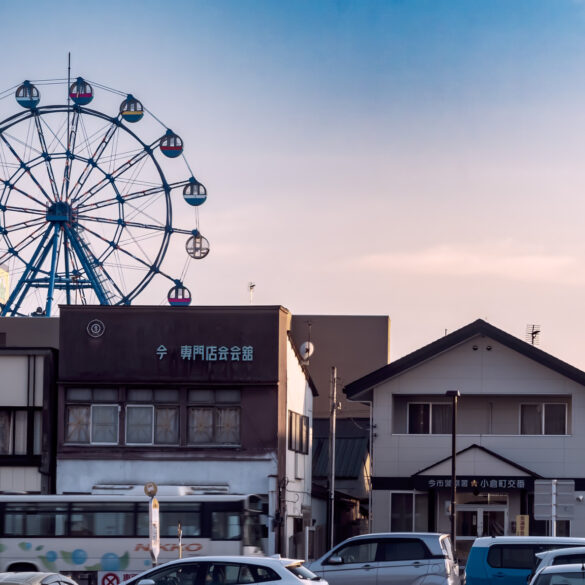
After one night in Tokyo and a quick lunch (inexpensive but outstanding chirashi-sushi with a photographer friend in Tsukuji), I took the Tohoku Shinkansen train from Ueno Station to Utsunomiya and transferred to the JR Nikko line but got off one stop early at Imaishi. Imaishi is the little town just to the east of the popular and historic temple town of Nikko, which was where I was heading, but Imaishi has its own famous cedar road and sakura road, and I thought I would check it out on the way.
On November 25, 2023 I had the pleasure of attending the closing reception for "Alix Bailey: Recent Paintings" at The Painting Center in Chelsea. The show, her fourth at The Painting Center, consisted mostly of large paintings of one particular model whom Bailey painted repeatedly throughout the years of the pandemic in the indirect light of her home studio.
The gallery indicated that Bailey began bringing only one model into her home during this time in order to limit the possibility for exposure to COVID during the pandemic. I noted that at least one visiter to her exhibition speculated that her work might have suffered from this limitation. However, I believe that Bailey chose to see it as an opportunity. She stated, "One of the rewards of working so closely with the same model over the years is that I come to know them in a way that adds another layer of meaning to the painting. Observing a person over long periods of time, really seeing them is a way of putting them in the light." As it happened, during this time the model appears to have undergone gender-affirming surgery and, posing nude, allowed Bailey to illustrate the transformation.
But what is even more interesting about these portraits for me — and, I suspect, for Bailey — is not the model’s physical changes but rather Bailey’s ability to evoke the inner light of the model while at the same time capturing the diffuse natural light of her studio and the way that it illuminates everything in the frame.
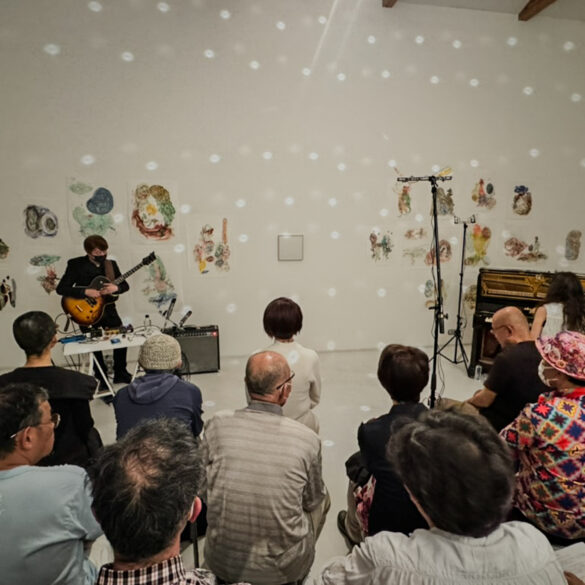
On my last night in Osaka, I attended the closing night reception for the solo exhibition 置き去られた鏡 The Forsaken Mirror by celebrated artist Chie Matsui 松井智惠. The performance consisted of music by avant-garde musicians sara (piano, perc.) & Shin’ichi Isohata 磯端伸 (guitar) and a poem read in Japanese, Korean, and English by Chie, Yangjah, and Miho, respectively. At first, I didn’t know what to make of the performance or the abstract, brightly colored prints surrounding a centrally hung mirror. Eventually, in the space created by the disorientation and abstraction, I reflected on who these people were, who I was, and the various identities we experience throughout life, which proved enlivening.
I initially knew Emmy only as one of the friendly baristas at Lê Phin, the lovely little Vietnamese cafe in the East Village that I stop by nearly every day to work, meet people, and enjoy their exquisite pandan matcha lattes and coffees. As soon as we started talking, I realized she was intelligent, confident, and mature. She was actually a working artist dedicated to bringing more beauty into the world and chose to work at the cafe occasionally to learn more about the food/hospitality industry. As I became more familiar with her work, I found that I loved her artist eye, her color sense, and her approach to life and art.
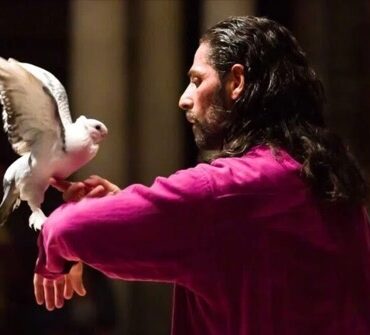
At the Aichi Triennale 2025, one experience stood out as a shared highlight for our group of thirteen: Bird by the brother-and-sister team Selma and Sofiane Ouissi. Doves make no effort to “collaborate” or to “create a good work.” For this reason, Sofiane must have needed a radically different reconstruction of bodily context than in dancing solo or with another human. That was what I wanted to witness.
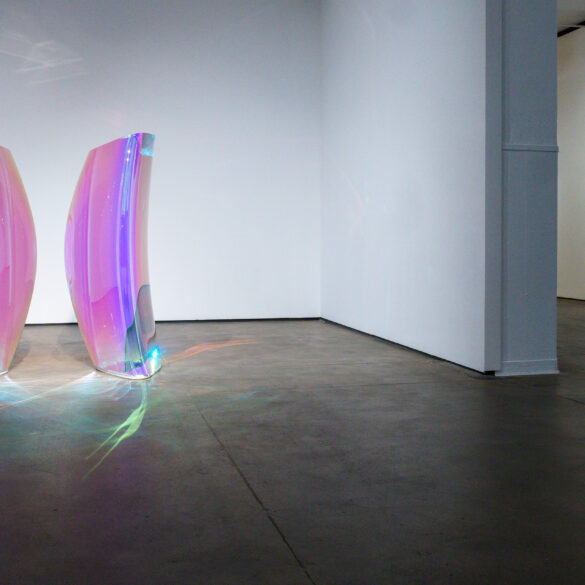
The creations of Japanese artist Mariko Mori, a respected and well-known figure in the international art world since the 1990s, have never seemed more present, needed, and timely than now. Why? In an era saturated with stimuli, her work invites us to slow down, suspend our assumptions, and enter a quieter relationship with ourselves, one another, and the world. Her art calls us back to what she simply names Radiance, the light and interconnectedness that underlie everything.
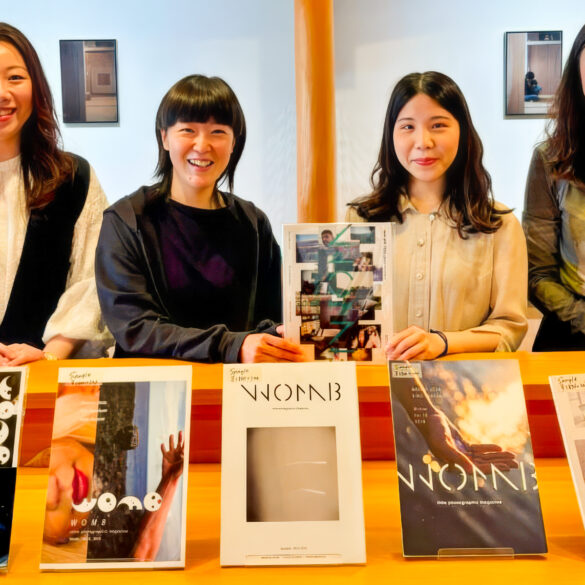
I had circled the KYOTOGRAPHIE KG+ Photographer Group WOMB’s 10th Anniversary exhibition as one not to miss. I was attracted to WOMB’s mission, which seemed to offer a feminine gaze yet take a metaphorical and expansive rather than body-centered view of a womb’s function. A small collective of Japanese female photographers who have been publishing WOMB photography magazine since September 2013, WOMB says they named their group and magazine to evoke “things that no one knows yet, a place where things are born (and grow).” Fortunately, I was able to meet two of the photographers, and among my many experiences at KYOTOGRAPHIE, this exhibition proved to be a highlight. Honestly, it was inspiring and rewarding beyond all expectations.
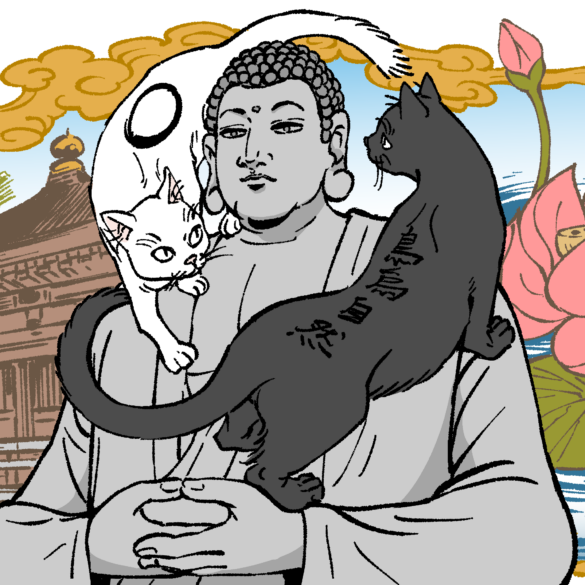
Photo © by Hiroki OtsukaOn my way from Kanazawa down to Hiroshima, I took a detour in Fukui Prefecture to visit Gotanjoji, a Sōtō Zen temple in Shoden-cho, Echizen City, known informally as a cat temple. I came for the cats, but I was also intrigued by the temple’s history, such as it is. While many temples in Japan are hundreds of years old, Gotanjoji was founded in 2002! Despite the temple's young age, its history dates back to the late 13th century Zen monk Keizan Jōkin 瑩山紹瑾, who was born in Echizen and was, I discovered, instrumental in opening Zen to women. Gotanjoji took it one step — or four? — further, bringing cats into the spiritual practice.
Comics are part of my DNA. I learned to read with Charles Schulz's classic strip Peanuts. I read any comic I could get my hands on: humor, war, super-heroes, horror, romance. The language of cartooning spoke to me in a way paintings and prose did not, emphasizing a narrative while using gesture, body language, and facial expressions in a way that preceded written language. As I grew older, I discovered that comics weren't simply being used to tell stories for children. The underground and alternative eras of comics in the US, along with strong traditions in Japan and France, demonstrated that comics could do anything and be for anyone.
When I realized that I wanted to be a writer, comics criticism became an outlet for the point of view I had developed over a lifetime. Writing criticism about self-published, small-press, and otherwise marginalized comics genres was a niche field within another niche field. It also gave me opportunities to write for a wide variety of publications, moderate panels at festivals, doing portfolio reviews, and even curate selections at one show for the Library of Congress. My greatest thrill as a critic was seeing young cartoonists develop over time, encouraging and pushing them with my writing.
Hustling for gigs and putting yourself out there can lead to some amazing things. In my case, I got a job teaching at the Sequential Artists Workshop (SAW), a comics art school. I started Rent-A-Critic, my freelance editing service for cartoonists to help them with everything from line editing to story structure to advice on writing pitches. I became the Programming Director for the Small Press Expo (SPX), the most important small press comics show in America. Most importantly, I was asked by a critic friend of mine to join him in forming our own non-profit company. Along with chief editor Daniel Elkin, publisher Alex Hoffman, and fellow critic Ryan Carey, we formed Fieldmouse Press.

Masahiro Usami creates art, photographic mandalas, by undertaking a journey, as much relational as through time and space, to understand and capture the essence of a community’s journey in collaboration with that community. In his words, “Each individual photograph [in his long-running mandala series] features a central figure, all of whom come from different regions and standpoints, and then distributed in their environs are the people and things that express the world of that particular figure, just like the form of a Buddhist mandala painting.” His latest depicts the confrontation between citizens and developers over a proposed radical redevelopment of a beloved and historic park in the heart of Tokyo.