
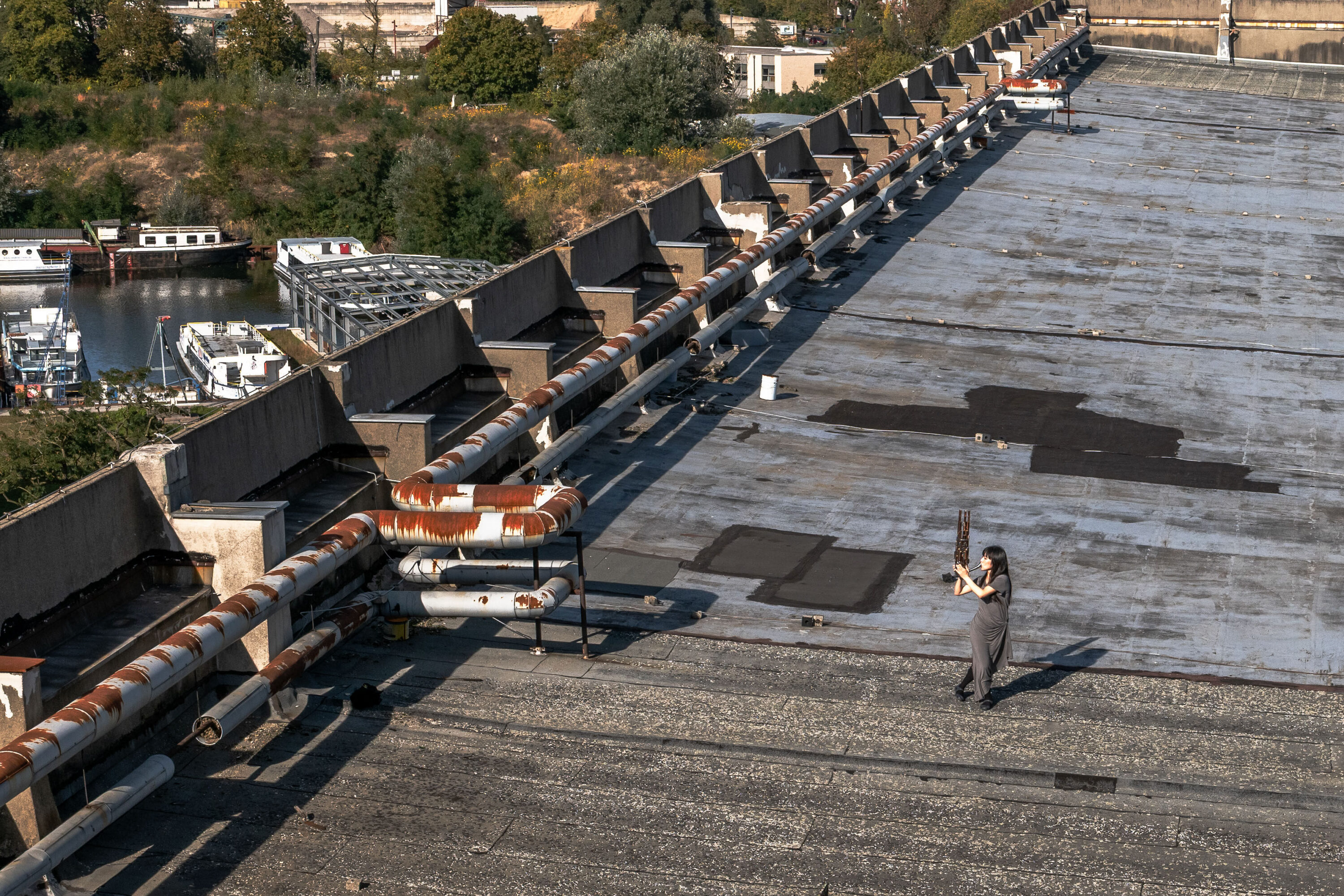
As I begin writing this article, I’m sitting in a café in southwest Berlin, once again juggling my roles as manager, agent, and artist, dealing with all kinds of administrative tasks. These include booking accommodation for my trip to the UK next week, making an online appointment to collect my newly approved French residence permit, and finally, after getting a decent night’s sleep, sitting down to write this article about my “artist life,” which I promised Christopher Pelham several months ago. I know that if I were writing this at a different moment, I would probably have different feelings and different stories to tell. But now, one week after PEOPLE Festival in Berlin, it feels like a good time to reflect on my recent experiences and some of the thoughts they’ve brought up.
Initiated by Tom and Nadine Michelberger, Mary Hickson, and others, PEOPLE Festival feels like a musical utopia where musicians from around the world can temporarily step away from their everyday lives to create, rehearse, and perform together. It brings together singer-songwriters, band members, and producers active in the international independent music scene, as well as performers from classical music backgrounds. Everyone leaves behind their usual stages and musical settings to meet, collaborate freely, and sometimes even form an entire orchestra. Each day, we traveled between Michelberger Hotel, where we were staying, and Funkhaus,where the performances took place. We lived, exchanged ideas, and rehearsed together, eventually bringing the music we had created throughout the week onto the stage.
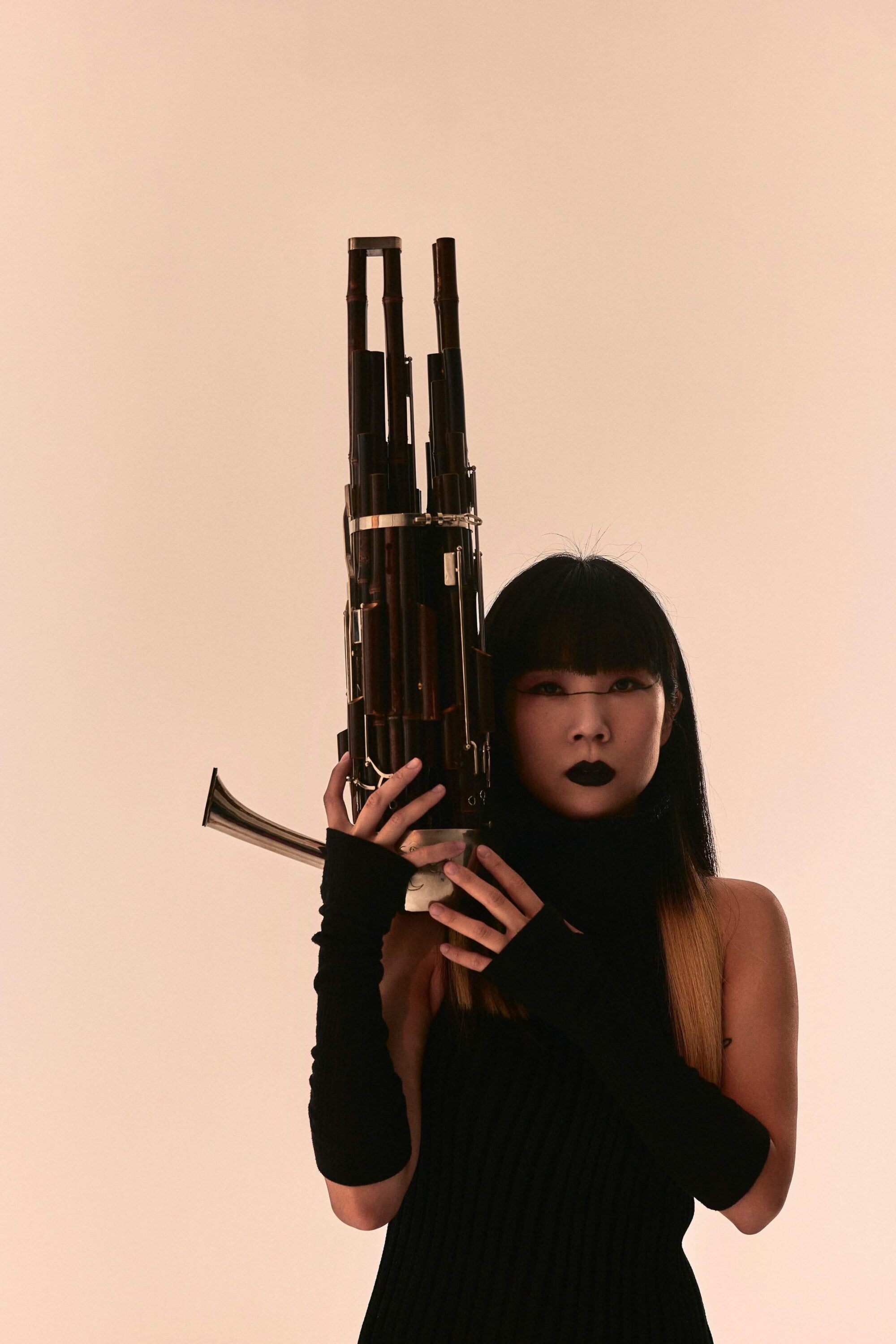
One of the musicians I met there was Norwegian saxophonist Bendik Giske, whose work I had long admired. We performed as a duo, exploring each other’s musical language through the sheng, a Chinese mouth organ, and the saxophone. Both instruments rely on breath to produce sound, and both can build musical energy through the continuous flow of air. Bendik is particularly skilled at circular breathing, allowing him to sustain uninterrupted lines with multiphonic textures. The sheng, on the other hand, doesn’t require circular breathing. By alternating rapidly between exhaling and inhaling, I can sustain harmonies through the movement of my breath. Although the two instruments produce multiple notes in completely different ways, their sounds can intertwine remarkably closely. I really enjoyed the fact that we performed entirely acoustically, without amplification, relying simply on the natural sounds of our instruments and the techniques we have developed over years of playing. It was an incredibly satisfying collaboration.
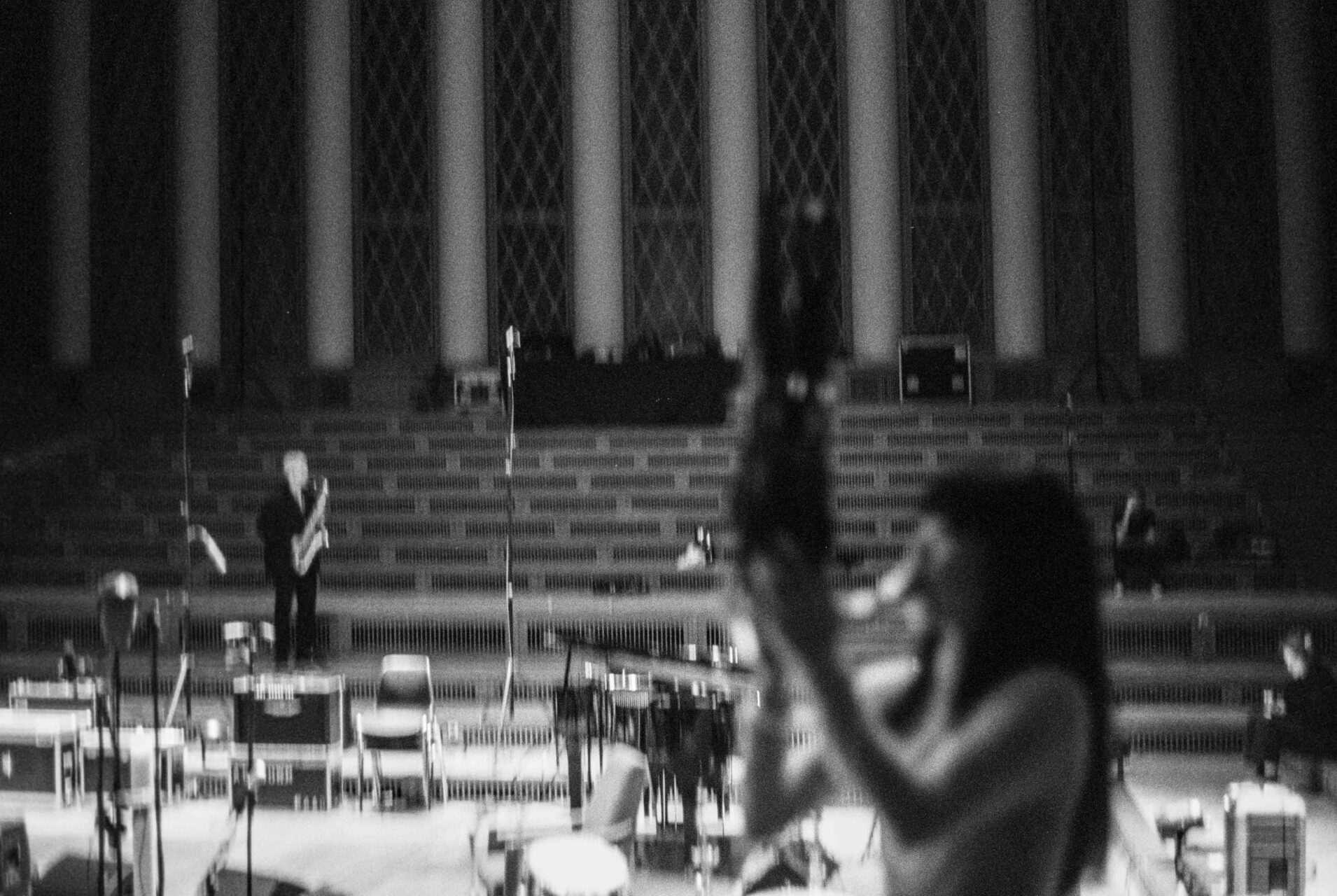
I also performed with German singer LEA, Canadian singer-songwriter Leif Vollebekk, and Efterklang, the Danish experimental pop band that has become such a distinctive presence in the international independent music scene. To be honest, collaborating with singers wasn’t something I had initially expected. In many musical settings, an instrumentalist working with a singer is primarily there to accompany them. But these artists were so talented that I found myself completely drawn to the musicality and vitality of their singing. Perhaps hearing different languages also inspired me in different ways. More importantly, they were all incredibly generous in giving me room to improvise within their songs. This allowed the sheng to become more than an unusual sound added to the music. It could genuinely take part in the musical conversation.
This is one of the reasons I continue to enjoy working across different musical genres. When we temporarily let go of our familiar performance formats and roles and stop assuming what position we should occupy within the music, new possibilities often emerge. Sometimes, based on my previous experience, I already have a fairly clear idea of the sounds and effects I can create. Yet when I bring the same approach into a different musical setting, working with musicians and audiences from different backgrounds, the chemistry can be completely unexpected. These experiences continually change how I feel about and understand my own playing. And some of these discoveries can only happen by actually being there.
For me, gatherings like this are more than a series of performances or collaborations. They also create temporary artistic communities. People come together through music, sharing a rhythm of daily life and creation for a short period before returning to their separate worlds. The emotional connections formed in just one week can be surprisingly strong. And when everything comes to an end, a kind of separation anxiety inevitably sets in. Even a week later, we’re only gradually coming back down from that experience.
The last time I took part in something similar was in 2024, when French independent filmmaker Vincent Moon invited me to La Symphonie de Ségriès in southern France. Vincent has a rather extraordinary way of life. For nearly twenty years, he has traveled around the world with his camera, rarely settling in one place. Through his distinctive artistic perspective, he has documented tens of thousands of valuable recordings of cultural practices, images, and sounds. He has maintained deep connections with artists around the world, and I have also collaborated with him regularly at performances in different European countries.
His way of living has, to some extent, influenced how I imagine my own life in Europe. I gradually came to realize that an artist’s life doesn’t necessarily have to follow one particular model. Some people choose to dedicate themselves to an institution or ensemble over many years, while others build their own artistic networks through constant travel, creation, and collaboration. I suppose there are simply people in this world who are willing to devote enormous amounts of time and energy to making artistic encounters possible.
What makes these gatherings especially valuable is that participants often take part without being paid, yet what we gain from them can be priceless. They are not simply performances or collaborations, but experiences of living and creating together. The relationships and artistic trust developed through these experiences often continue to grow in different forms long after the events have ended. All these encounters have made me reflect on how I gradually found my way into this international artistic network, and how this way of living slowly became part of my everyday life.
How does a Taiwanese musician who plays the sheng find her way into a network like this? There are probably many ways to answer that question, but the first, and perhaps most important, is quite simple: I have to actually be here. What I mean is that I need to genuinely live in Europe, so that people don’t feel I’m too far away. These days, people naturally say things like, “Li-Chin is based in Paris,” or “Li-Chin is based in Berlin.” When people know I’m somewhere nearby, the possibility of working together suddenly feels much more realistic. Sometimes a last-minute invitation, a gathering with friends, or a conversation after a concert can become the starting point for another collaboration. These opportunities often build on repeated encounters and the trust that develops over time.
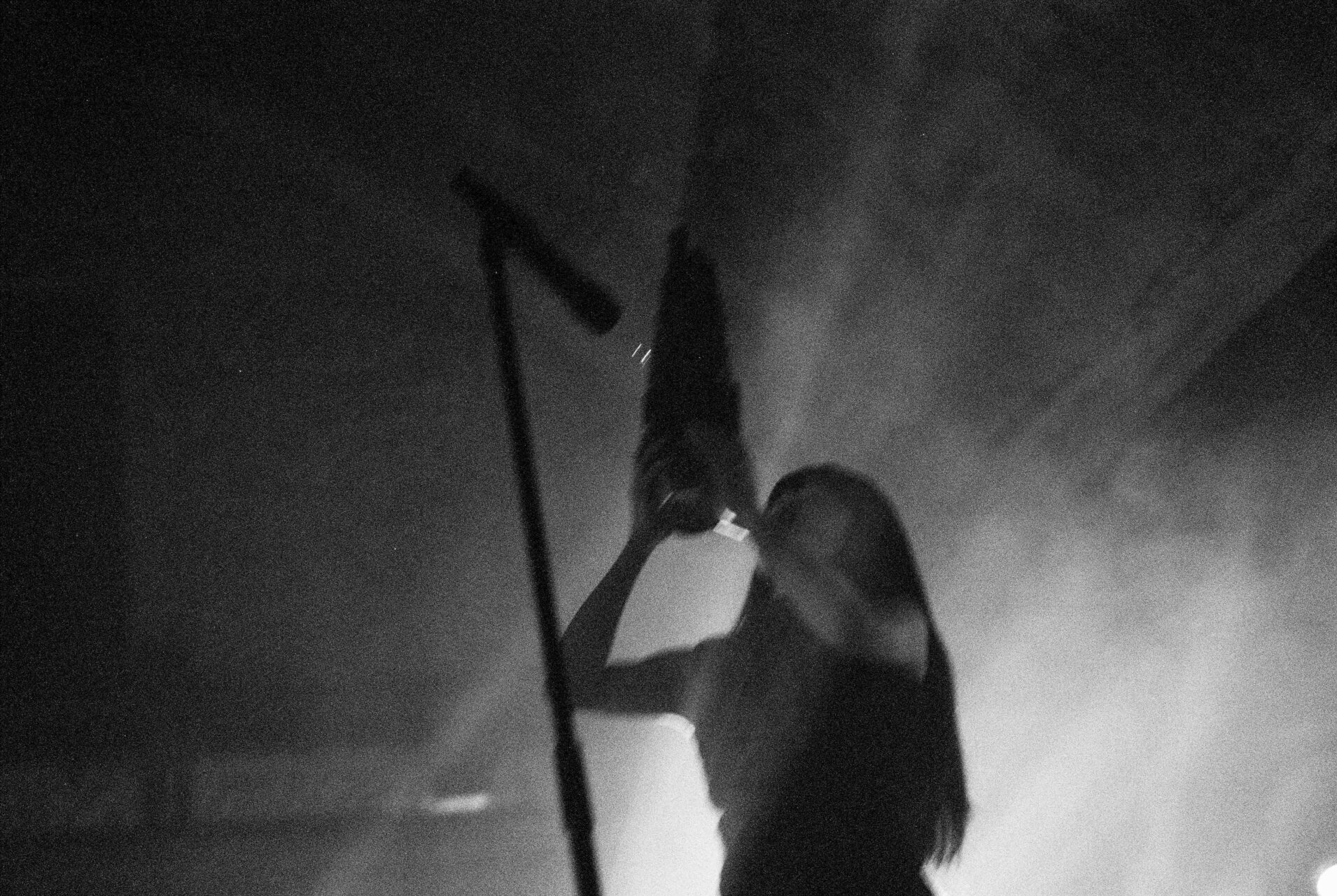 Photo © by Michele I. Arazi / @michelearazi
Because of my work, I have indeed spent much of my time traveling and moving between places. This way of life probably began in 2021, when I spent six months as an artist-in-residence at the Cité internationale des arts in Paris. During that period, I became more familiar with the European arts scene and gradually realized that living in Europe was something I genuinely wanted to do, and something I could imagine continuing for a long time. Looking back, I think much of this journey has been driven by my love of adventure and my willingness to embrace an uncertain future. I’ve always thought of myself as a cup that still has room to be filled, ready to welcome new possibilities. That attitude has been one of the things keeping me moving forward. I’m also deeply curious about different cultural traditions, and I love the encounters that art makes possible. These are the things that keep drawing me into unfamiliar environments, wondering what unexpected experiences might come next.
For me, living abroad is not simply about changing where I live. It is an ongoing process of encountering different ideas, sounds, and approaches to making art. Moving between cities and artistic communities often means having to adapt to new environments in a very short time. And whenever I meet people with different cultural backgrounds and artistic perspectives, I also need time afterward to absorb those encounters, reflect on them, and reconsider my own ideas.
I’ve also become increasingly aware that choosing this kind of mobile life at different stages of one’s life can have very different effects. Sometimes I wonder what it would have been like if I had started living this way in my early twenties. Perhaps I would have approached it more simply as an opportunity to explore the world, allowing all those new experiences to bring fresh perspectives and inspiration into my music and performances.
But as I approach forty, the questions I face are beginning to change. Alongside the desire to keep exploring and creating, I also need to think about maintaining financial stability and a certain quality of life. And I need to consider how the artistic practice I’ve developed over many years can continue to move forward with a clearer sense of direction in my professional career.
I still deeply value the freedom of artistic exchanges that aren’t restricted by established formats or expectations. At the same time, I’m increasingly focused on bringing my own artistic language into established contemporary music contexts, where it can be fully realized through meaningful artistic collaborations and professional support. For me, this isn’t simply about the scale of a performance or gaining greater visibility. It’s about bringing the performance experience and artistic thinking I’ve developed over the years into a dialogue that is more closely connected to the context of my own practice, through institutions with the public resources and curatorial expertise to support it.
In recent years, my work has mainly been situated within contemporary music and free improvisation. Sometimes I’m invited to perform concertos with orchestras, both Western and Chinese; at other times, I collaborate with contemporary music ensembles, performing works written for the sheng in various instrumental combinations. These performances continually expose me to different compositional languages and ways of thinking about music. They also allow me to explore the possibilities of the sheng as a contemporary instrument through a wide range of collaborations. Alongside performing existing compositions, improvisation combined with physical performance has become an important part of my own artistic language. I often perform solo, using the sheng to explore different relationships between myself, the space, and the audience.
My interactions with audiences are largely guided by intuition developed through years of performing, together with my immediate response to the atmosphere of a particular space. I enjoy breaking down the conventional distance between the stage and the audience. Sometimes I move closer to people while playing. At other times, through bodily movement, physical contact, or leaning against someone, I create an unexpected sense of intimacy, always within boundaries that both sides are comfortable with.
For many audiences, the sheng is an unfamiliar instrument. When its sound no longer comes from a distant stage but is heard at close range, sometimes almost directly against the body, I believe it creates a completely different listening experience. The audience is no longer simply sitting and receiving sound. Through their bodies, senses, and physical proximity to the performer, they become directly involved in the experience of sound as it happens. These performances take place through invitations from different institutions, festivals, and artistic organizations. Each collaborator has their own program, artistic direction, and particular needs, and I continually look for ways to engage with those different contexts.
And now, as I reach this point in writing, I’ve already arrived in Oxford. Tonight, I’ll be performing at Audiograft, the annual festival of experimental music and sound art organized by Oxford Brookes University, with the performance taking place at The Nest. This time, I’ll be collaborating with Chinese sound artist Zhuo Mengtingon an experimental sound and improvisation performance lasting nearly half an hour. Before meeting in person, we’ve already discussed some possible approaches online. But I suggested that we wait until we’ve actually seen and explored the performance space before making more definite decisions about the direction of the piece. I’m really looking forward to this kind of organic collaboration, where we leave room for the work to develop in response to the conditions of the space and the moment.
For me, uncertainty doesn’t mean a lack of professionalism. On the contrary, once we have a shared understanding of the kind of listening experience we want to create, and a sense of one another’s artistic language and performance approach, we can confidently leave part of the process open to the unknown. The sounds and interactions that cannot be planned in advance can then emerge through listening, responding, and making decisions in the moment, drawing on the professional judgment we’ve developed through years of experience. That’s often where the most exciting things happen.
And now, I should probably get ready for tonight’s performance.
There are actually so many more things I’d love to share, but I think I’ll save them for next time!