
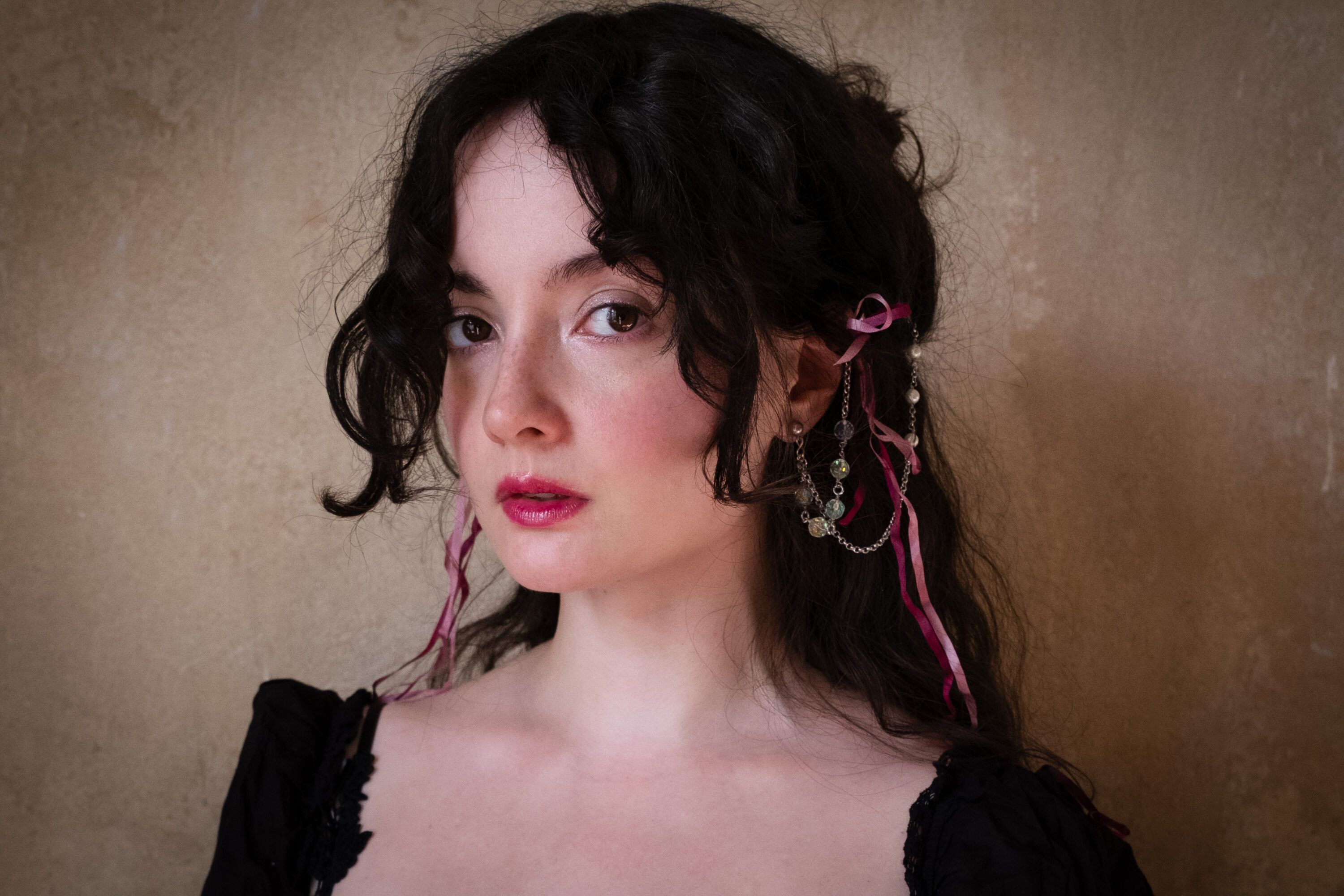

When I went to the living room this afternoon, the TV was on. All of a sudden, I felt really weird. Probably because it was a variety show, not a news show. I understood, Ah! TV is about growing people’s feelings of connection and empathy. People want to see the same thing and feel the same way. That was the thing for the last era. But aren’t we facing the next era? We have to own our feelings and creativity and be confident and comfortable with them.
I felt this because it was right after the interview with Glória de Oliveira, talking about the future of the music industry and AI in art. How do we make a living in the music business sustainably, or does it even exist? These are still ongoing questions of mine, and apparently, Glória and her friends are having the same conversations on the other side of the world.
Glória is a Dream Pop singer-songwriter, producer, visual artist, and founder of a label, La Double Vie. I have played a few shows for her project, and she is one of my inspiring, supportive colleagues in the Berlin music scene. She is releasing her new album soon, and at the moment she is very busy editing the new promotional videos.
She is releasing her upcoming album with La Double Vie, which she has mostly used to release other people’s music over the past few years. Now she is also putting out this album with her own label, as well as with Cargo Records. As a founder of the label, she works for others and knows how much work it is, and, of course, she understands how much we artists work before the promotion process even begins. The main part of the work is creating the music itself, and it can already burn you out. It is not easy, but we love it.
(By using AI,) creating becoming easier can be fun, but that’s not art yet. It’s just content. I can see how for someone who’s not an artist it might be interesting when they put in some prompt and then something comes up and when they listen they’re like ‘oh, yeah, cool.’ But how can you expect someone else to find that interesting? Because that doesn’t involve a lot of meaningful creative input or impulse or anything. I’m not saying that art always has to be this super strenuous process where you have to practice for 50 years. I think there’s something great about being a dilettante, you know, like an amateur, I think great art can be made that way.
Take for example Daniel Johnston. He died a few years back, but in the 80s and 90s, he released a lot of cassette tapes that he recorded himself at home on a shitty cassette player. And then he sort of became this huge cult musician and played a lot of shows as well.
If you listen to it, it’s very lo-fi and rough around the edges, but his songs and his words and his ideas and the way he sang them and even the quality of the homemade tapes, it all comes together as something that is so affecting. And what if he had just said, no, my cassette recorder is not good enough? My skills are not good enough. I’m going to just put my idea into Suno. Oh my God, we would have lost something truly great. I think you should honor your imperfections and maybe, if you can’t play an instrument that well yet, it can even be a good thing. Maybe it gives you a more creative, left of field approach to it.
We both acknowledge how useful and inspiring AI programs can be for our creativity, and how they have lowered the bar for creating content. But mind you, those are the contents. Not art. So now, what differentiates content and art is the question for Glória and me.
Someone told her how great and enjoyable it is to use Suno, the music-creating AI program. Yes, we understand. How amazing it is for non-musicians to create music just by telling the AI what they want through a prompt. I know the excitement of creating something and having the creation become reality. And probably, that’s the feeling I felt when I had my six-horn arrangement played by a band, or when I rehearsed with a band to play my new song, telling them how I wanted it and then playing it for the first time. I get it.
But the question is, do you call it your music? Do you feel that it represents you? Content doesn’t have to go through these questions, because most of the time, it is not about expressing your feelings or your thoughts, but art is. And maybe that is why this question feels so important to me. I ask myself the same thing every time I create something.
Maybe we artists casually get ideas and produce them, but it seems easy because we have trained, practiced, and asked ourselves so much before we got to this state. What defines “my music”? Who am I??? All sorts of questions like this.
And maybe this question of “my music” is not only about music. It is also about how we have learned to look outside ourselves for answers—to decide what is good, interesting, successful, or worth our attention.
Maybe this is also why that TV show bothered me. The problem isn’t simply that AI can create content for us. It’s that we are already living in a culture where we constantly look outside ourselves for something to consume, something to like, something to tell us how to feel.
Then the TV image hit me. For a long time, it mattered to be popular. Popular = many people liking the thing. Many people are talking about it, interested in it, we feel the same = we are safe. But as we look outward for how others and society think, and what’s good and right… I think we left ourselves behind.
Instead of trusting our gut feelings, we ask someone else to answer the question. Maybe AI-generated content is simply the next version of the same thing: we just give up the real feeling, the excitement of creating something. Creating life. Which can be hard, which can be tough, but it is you. Life is for you to feel. And there’s no love where and when the product is made without stories.
Instead of enjoying the moment, we look for other, better content to be distracted. Instead of loving what we really love, we just follow the trend and buy another one. We search for the safe way to get through this unknown life, how to become successful… But is happiness only in one form?
If the culture keeps encouraging people to consume rather than create, feel, and perceive, and if we are losing the habit of trusting our own senses and perspectives, I think artists now have an important role to play in offering another way of experiencing the world.
It is very important these days for us artists to take responsibility for sharing the art that really means something to us—how and what we actually do—and let others try and peek at how we see the world. The music industry isn’t generating money from the art part of it, maybe because we stopped believing in the power of music. But I know we still feel the power of music.
Music is the reason why we have lived our lives this far. My own music heals me, soothes me, and motivates me. Playing live and getting real feedback from the audience cheers us up and makes us happy. The words really mean it, because we are so serious about what we do. And everyone deserves this treat of feeling gratitude.
The love for creation, products made with love, living with your favorite things… love to ourselves. After all, love is the key to this world.
I am aware that my producing skills aren’t there yet. My bass playing sucks. And I am not a daily singer. So my demos sound imperfect, if not crap. But I still love them. I already love them. That’s because they were born from me. I created them. Something that was in my head became music.
Many times I am afraid that this is not my original creation because sometimes the song shows up so effortlessly. And in fact, sometimes, it happens that I borrow a phrase from someone else’s creation. Not entirely. But some idea just inspires me and leads me to write another idea. And that’s also okay. The whole process of questioning and knowing that you can also create something—that matters.
I was sharing with Glória that my production process is without much thinking compared to how my producer thinks and gives all his thoughts to the production. But what she replied to me changed the way I see my process.
He tells you all about these thoughts, but for him, that’s probably all pretty much automatic as well, because he’s worked so long as a producer that these impulses are by now second nature.
He hears something and intuitively feels like ‘oh, I’m going to EQ it this way’. Just like for you, playing things a certain way has become automatic through years and years of training and practice.
So I think for him, who’s been a producer for a long time, it’s not like this super intellectual, cognitive process. It comes natural due to years of practice behind him. And I think just completely skipping these stages is not going to make for better art, no matter what anybody says.
A lot of people within this discussion also seem very unable to… perceive nuance. Things are not black and white.
There are always these arguments such as “oh but what about the synthesizer?” That’s an electronic means to achieve something, sure. But it’s not like telling Suno ‘I want you to arrange a whole song and have a female voice sing it.’ I read a lot of these comment sections where people are arguing about AI and someone will always defend it like ‘yeah in the 60s people were complaining about synthesizers. Just like you’re complaining about AI now.’ Dude, it’s not the same.
And that really made me think about what we mean when we say something is “easy.” Maybe the ease we see in someone’s creative process is often the result of everything they have already learned, practiced, failed at, and absorbed.
This part is also often misunderstood. Many people are so used to getting paid hourly, so they only think about how many hours it took for us to create the thing. Or how many hours we were there to perform. Yes, maybe it took only a few hours for me to create the demo. Maybe my show was only for a few hours. But there are so many hours spent on rehearsals and preparation. And even before that, we have spent so many hours becoming the artist we are now.
It’s not like I want to take away the comfort and the ease and accessibility for people to have fun with. Even non-AI tools such as Canva – it’s great if you can do a birthday invitation or whatever, or even for your show, you can easily create your own flyer or tour poster. Great. But the truth is, it’s never going to be as good as when it’s made by someone whose life mission it has been to create great graphic design. With all those tools and AI slop taking over everywhere, we as a society have to be careful not to lose sight of the importance of craft. When I work with a real designer who’s been designing all their lives, who has been properly trained and educated, I’m like, oh my God, they perceive things that I don’t even see, like minute details with the letters and spacing – things I would never have thought of, but which do make a real difference on the impact of the design.
The things that look effortless often carry an enormous amount of invisible human experience. It is not easy to teach people that. How we phrase what we say often doesn’t exactly carry what we really want to mean. We see things because we have experienced them.
And this is why we need to keep sharing our thoughts and art. Art is the way we see the world—how intensely, closely, and maybe from a totally different point of view.
Keep pouring something speechlessly good. Keep vocalizing different voices. So that can open our minds and hearts.
As much as we are concerned about the future of art with AI, we still see hope, and we notice that there’s a “trend” towards handicrafts and great live music. And I think that’s where we are moving towards. And that is the power of music and creativity.
People are tired and overwhelmed by AI-made content, which is generated to be liked by the masses. We swipe so much. We lose focus and appreciation for the things around us. We spend so much time skipping and swiping.
Why don’t we actually spend our time appreciating and loving our favorite things? Why don’t we just simply love the people in front of us? Why don’t we just stop and take time for ourselves? We are not looking at ourselves, but somewhere and someday.
When I said that, she said it also applies to relationships.
This swiping ruins people, especially for men, to have meaningful relationships.
Capitalism tells us that we are lacking something, that we are not enough, that we have to do things, consume stuff, and always move. But we are at the end of it. And we have to remember that we already have enough. We are enough just as we are.
It was really interesting to have this conversation with Glória that day. Because just before this interview, I felt a bit overwhelmed by busy Tokyo life and had a simple walk in a park in the middle of the city.
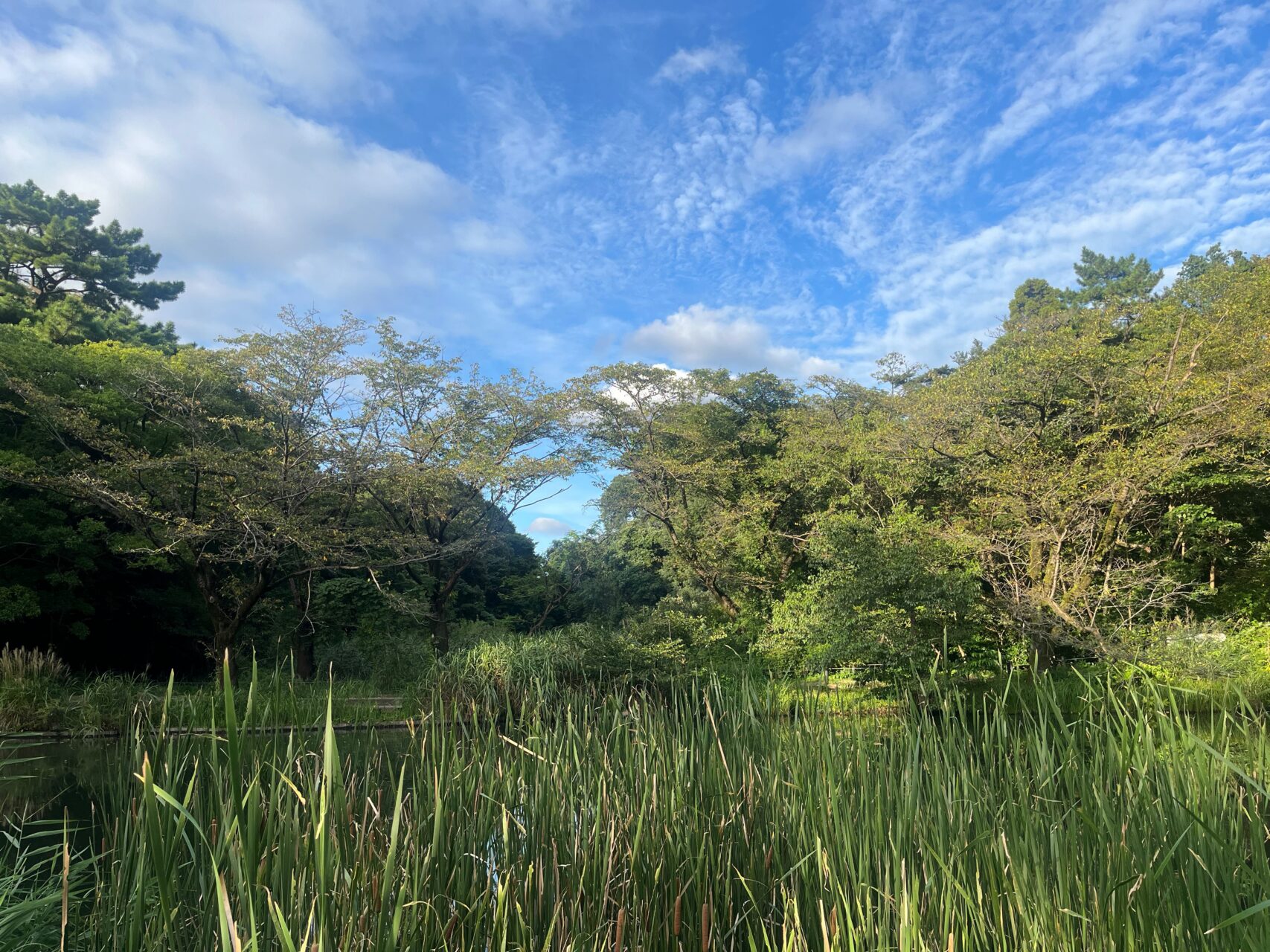
There was nothing, and in the center, I didn’t even hear the cars. Trees were growing wildly there, the water wasn’t clean, but there was life. Crawfish, cicadas, even a raccoon walked by. I just sat there. Doing nothing.
With my eyes closed, I just tried to feel what was around me. And listened. Cicadas shouting filled up my mind.
A few minutes later, I felt better and went back to my life.