In a season marked by a surge of Asian-led theater in New York, director and playwright Tara Nyingyè is carving out her own luminous path. From her Mandarin-language reimagining of The Legend of the White Snake at HERE Arts Center to her newest English-language work, angels, Tara blends physical theater, psychological inquiry, and bold structural experimentation to ask timeless questions about love, choice, and repetition. As part of a new generation building not only productions but institutions, she and her collaborators are reshaping what contemporary theater can look and feel like — urgent, embodied, and unmistakably alive.
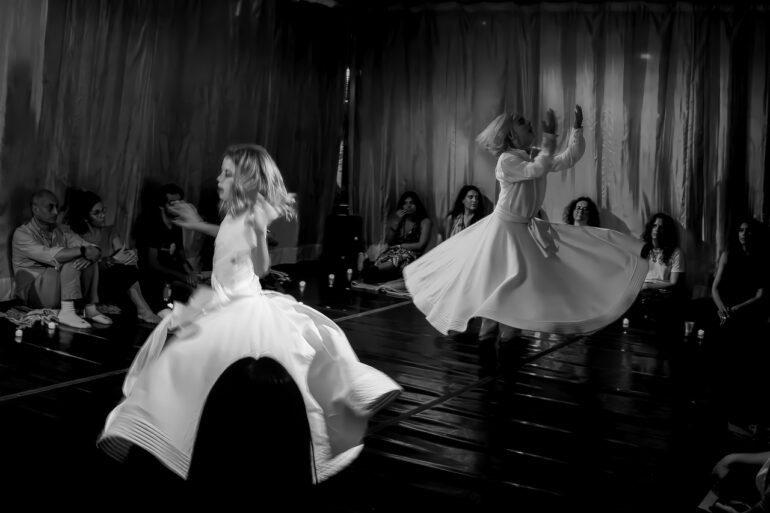
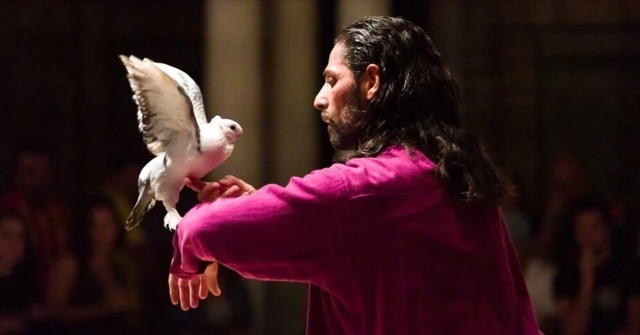
At the Aichi Triennale 2025, one experience stood out as a shared highlight for our group of thirteen: Bird by the brother-and-sister team Selma and Sofiane Ouissi. Doves make no effort to “collaborate” or to “create a good work.” For this reason, Sofiane must have needed a radically different reconstruction of bodily context than in dancing solo or with another human. That was what I wanted to witness.
The creations of Japanese artist Mariko Mori, a respected and well-known figure in the international art world since the 1990s, have never seemed more present, needed, and timely than now. Why? In an era saturated with stimuli, her work invites us to slow down, suspend our assumptions, and enter a quieter relationship with ourselves, one another, and the world. Her art calls us back to what she simply names Radiance, the light and interconnectedness that underlie everything.
During my autumn stay in Japan, two compelling reasons drew me to the Aichi Triennale, which brought together a diverse group of non-Western artists/groups, including participants from the Middle East, Africa, and Latin America, alongside Asian artists/groups, with twenty-six from Japan, and took place in the Aichi Arts Center and Aichi Prefectural Ceramic Museum in Seto City, Japan from Sept 13 to Nov 30, 2025.
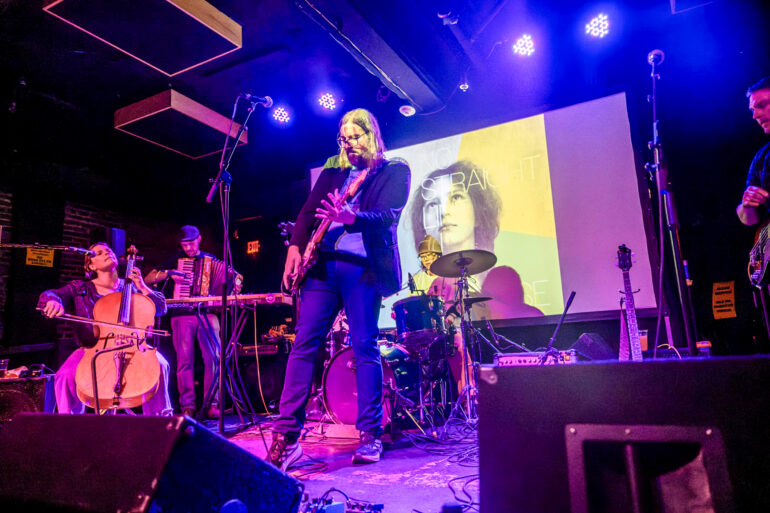
No one ever actually told me how to live as a musician. There are many ways, and you have so much freedom to create your own way. And that’s not easy because the choices are endless. So, I started this series of interviews to ask my friends how they live as artists. This first interview was with Todd Marston, my long-time friend and a keyboard player, composer, and educator.
Sylvester "Sly Stone" Stewart died on June 9th, 2025. There have been a lot of narratives about his life and death, but less about his music, particularly his under-appreciated 1973 album, Fresh. True to its title, Fresh is lighter, more relaxed, and much more personal than any music Sly had written to date. It's also much funkier, as Sly had in turn embraced the deep grooves of the Bootsy Collins-era JBs of James Brown.
Paul Hansen is the person who inspired me to explore this theme I call Art of Life. When we last talked on Zoom, he said something that stayed with me: artists have to find their own way to live because no two lives unfold the same way. In this interview, Paul repeated that the essence of life is a long chain of decisions made based on one's own aesthetic sense, and that is what it means to be an artist.
Perhaps it was a kind of revelation when I realized what I longed for was a lake. A still lake, shrouded in mist — peaceful, yet faintly uncanny. And Morcote, by Lake Lugano, appeared as the answer, after just a few seconds of searching on my computer. Since then, Morcote has become synonymous with Stillness to me, a word I return to whenever I need calm within my own mind.
Before encountering the artworks themselves,
the moment I stepped into the venue,
I felt as though I were descending into the deep sea.
A profound stillness emerged—the kind found when one sinks toward the ocean floor, where only one’s inner pulse can be heard. I noticed my breath slowing, and I simply watched it do so. From the space itself, I sensed a quiet invitation: you can go deeper. At the same time, I felt momentarily overwhelmed by the intensity of the energy. I sat down, closed my eyes, and listened to the presence lingering in the air.
by Hai Yen Ho| November 9, 2025 | Literature Among the countless fragments of memory vying to become the most...
The world is full of people who leave the place they were born, only to survive and then die in a place they never expected to live. The world is full of people who live without purpose, without any relationships, without any stories, or many that no one cares to know, despite the constant progress of everything around them. Such people tend to appear the most often in America, and even more in New York, the place where the no-identity-faces gather, the embodiment of the splendid America, the image that represents the most solid but also the most easily shattered dreams.
I saw one of them on the first morning after arriving in New York right after stepping out of a concrete hotel on Twenty-fourth Street, heading towards Seventh Avenue. For a moment, I had the idea of doing something different from the drivers — that is, following the African man to his destination.
Rema Hasumi’s music rises to higher ground, but it navigates deep and turbulent waters to get there. That journey has taken on new dimensions in recent years, as her journey through motherhood has reshaped both her life and art, leading to the release of her new album, Mothers.