Comics are part of my DNA. I learned to read with Charles Schulz's classic strip Peanuts. I read any comic I could get my hands on: humor, war, super-heroes, horror, romance. The language of cartooning spoke to me in a way paintings and prose did not, emphasizing a narrative while using gesture, body language, and facial expressions in a way that preceded written language. As I grew older, I discovered that comics weren't simply being used to tell stories for children. The underground and alternative eras of comics in the US, along with strong traditions in Japan and France, demonstrated that comics could do anything and be for anyone.
When I realized that I wanted to be a writer, comics criticism became an outlet for the point of view I had developed over a lifetime. Writing criticism about self-published, small-press, and otherwise marginalized comics genres was a niche field within another niche field. It also gave me opportunities to write for a wide variety of publications, moderate panels at festivals, doing portfolio reviews, and even curate selections at one show for the Library of Congress. My greatest thrill as a critic was seeing young cartoonists develop over time, encouraging and pushing them with my writing.
Hustling for gigs and putting yourself out there can lead to some amazing things. In my case, I got a job teaching at the Sequential Artists Workshop (SAW), a comics art school. I started Rent-A-Critic, my freelance editing service for cartoonists to help them with everything from line editing to story structure to advice on writing pitches. I became the Programming Director for the Small Press Expo (SPX), the most important small press comics show in America. Most importantly, I was asked by a critic friend of mine to join him in forming our own non-profit company. Along with chief editor Daniel Elkin, publisher Alex Hoffman, and fellow critic Ryan Carey, we formed Fieldmouse Press.
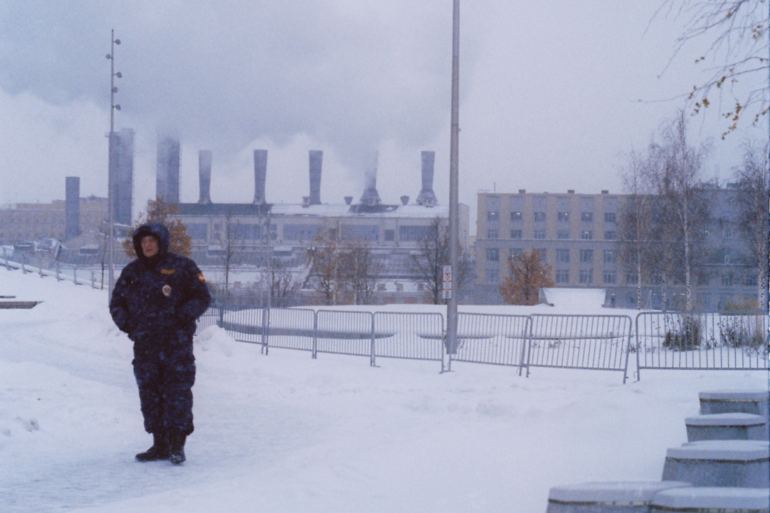
The previous night, the snow fell heavily. The snowflakes fell gently yet fiercely, floating through the night like magical creatures. The cold crashed on me suddenly as soon as I stepped outside, aggressively occupying all the corners in my body, sneaking into every inch of carelessly exposed skin. The cold froze on the skin, piercing my brain, aching with every breath. On cold winter nights like this, the best thing to do is to stay in a cozy room, drink a cup of ginger tea, and talk about everything — except politics, of course. Politics in Russia these days is taboo. Russians avoided the subject like a terminal illness. “War in Ukraine? No, don’t worry, we are fine.” They changed the subject. Except Varf Labec.
Ever since I was a child, I have always known that the world around me was much larger, that it was not limited to a small market, a moldering temple with a desolate courtyard, a solid church that I had not entered, rows of houses, schools, and a highway. That poor and ragged landscape never limited my imagination. I did not know how I got there, but I always knew that one day I would leave it. I knew I would travel to other vast places, reach the tops of mountains, dive to the bottom of the sea, and talk to people in every corner of the world.
by Hai Yen Ho| November 9, 2025 | Literature Among the countless fragments of memory vying to become the most...
I don’t know why I came here. Waking at four in the morning, inside this airtight dormitory room with no windows, I can only tell the time from the screen of my phone. Below my bed, the Afghan girl is snoring softly. I imagine her bed, surrounded by piles of stuff hung haphazardly like a rumpled bed curtain. She’s been here for two weeks; the items hanging around the bed are a way for her to assert her attachment, her sovereignty, and to establish herself more firmly than the others, which currently consist of me, a Cambodian girl, and an Indonesian girl.
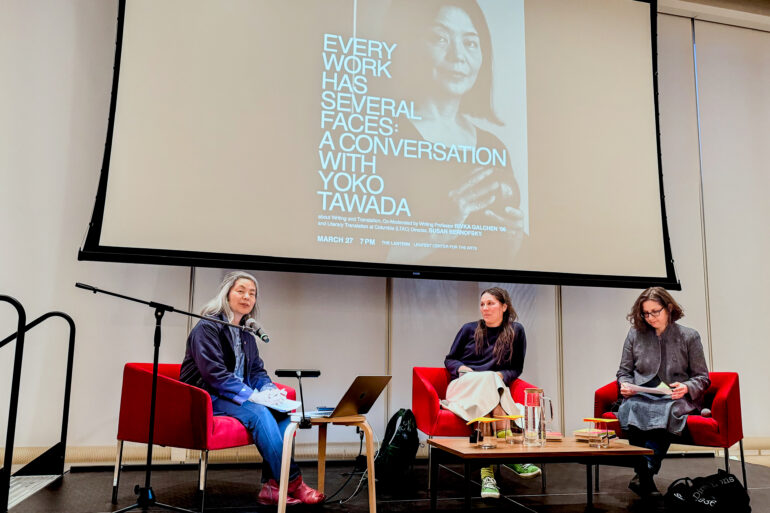
I had the honor of introducing Yoko Tawada’s seminal lecture “Every Work Has Several Faces: A Conversation with Yoko Tawada about Writing and Translation,” delivered at the Lenfest Center for the Arts, Columbia University School of the Arts, on March 27, 2025. In this article, I expand on that introduction, exploring how Tawada, a borderless wordsmith, shatters linguistic confines through writing and translation: her language erases frontiers and reconfigures reality, existing not as the ruins of Babel, but as a thriving, pulsating, organic entity.
Born in Tokyo and now residing in Berlin, Tawada is a celebrated writer of fiction, poetry, and a deeply engaged thinker on the nature of language. Writing in both German and Japanese, she is recognized as one of the most distinctive multilingual voices in contemporary literature.